
10 Classroom Management Strategies for Modern Teachers
What makes a classroom run smoothly, and why does it still feel hard to manage every day? If you are juggling multiple classes, assignments, and different student levels, staying organized is often the real challenge. This guide shows practical classroom management strategies you can apply right away, and how Estudyme classroom management keeps everything on track.
What Is Classroom Management?
Classroom management is how a teacher keeps the class running smoothly and clearly so students can learn without unnecessary confusion or disruption. It gives students a better sense of what to do, what to expect, and how to stay on track during each lesson.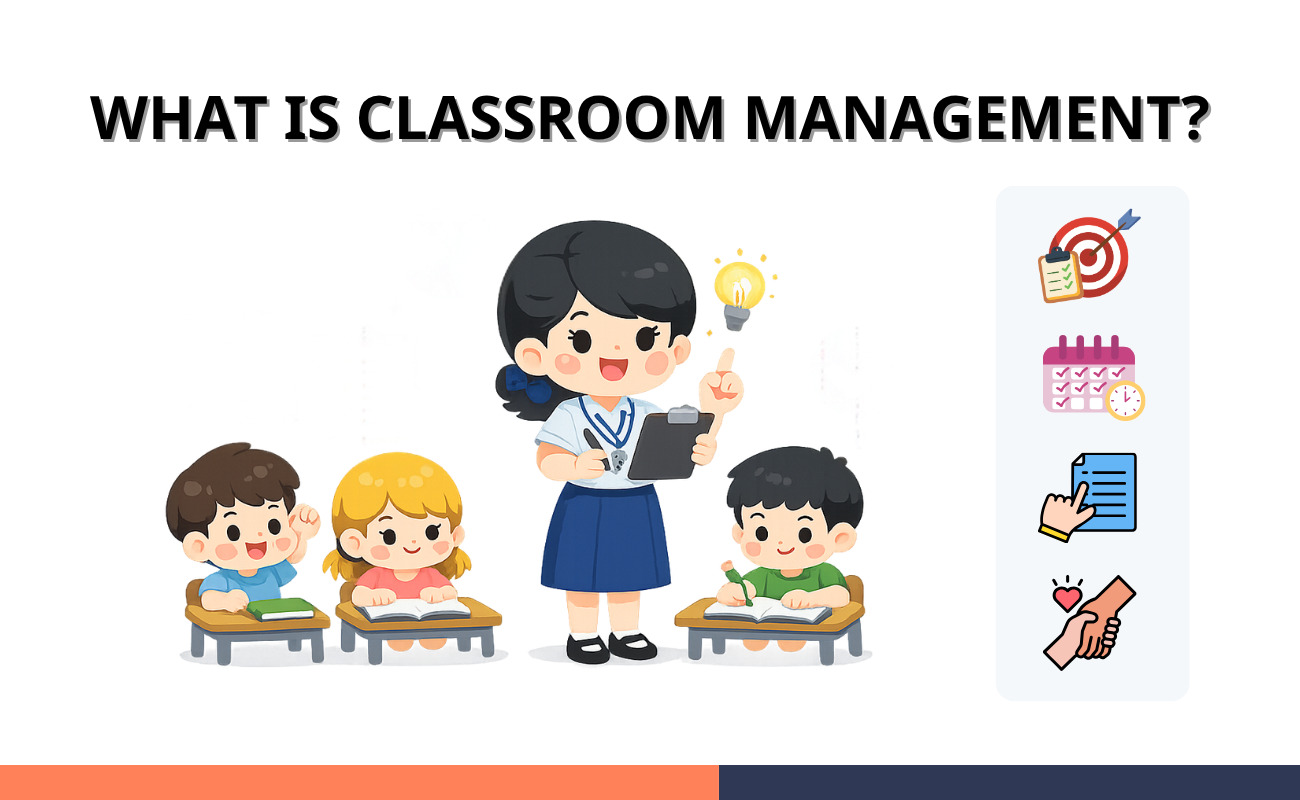 Classroom management definition
Key components of classroom management include:
- Clear expectations
- Consistent routines
- Effective instruction
- Supportive student relationships
10 Classroom Management Strategies and Techniques
The difference often comes down to small, consistent actions. Here are strategies that actually work in real classrooms.1. Set clear rules
Students perform better when they know exactly what’s expected of them. Clear rules remove uncertainty and guide students toward the behavior you want to see.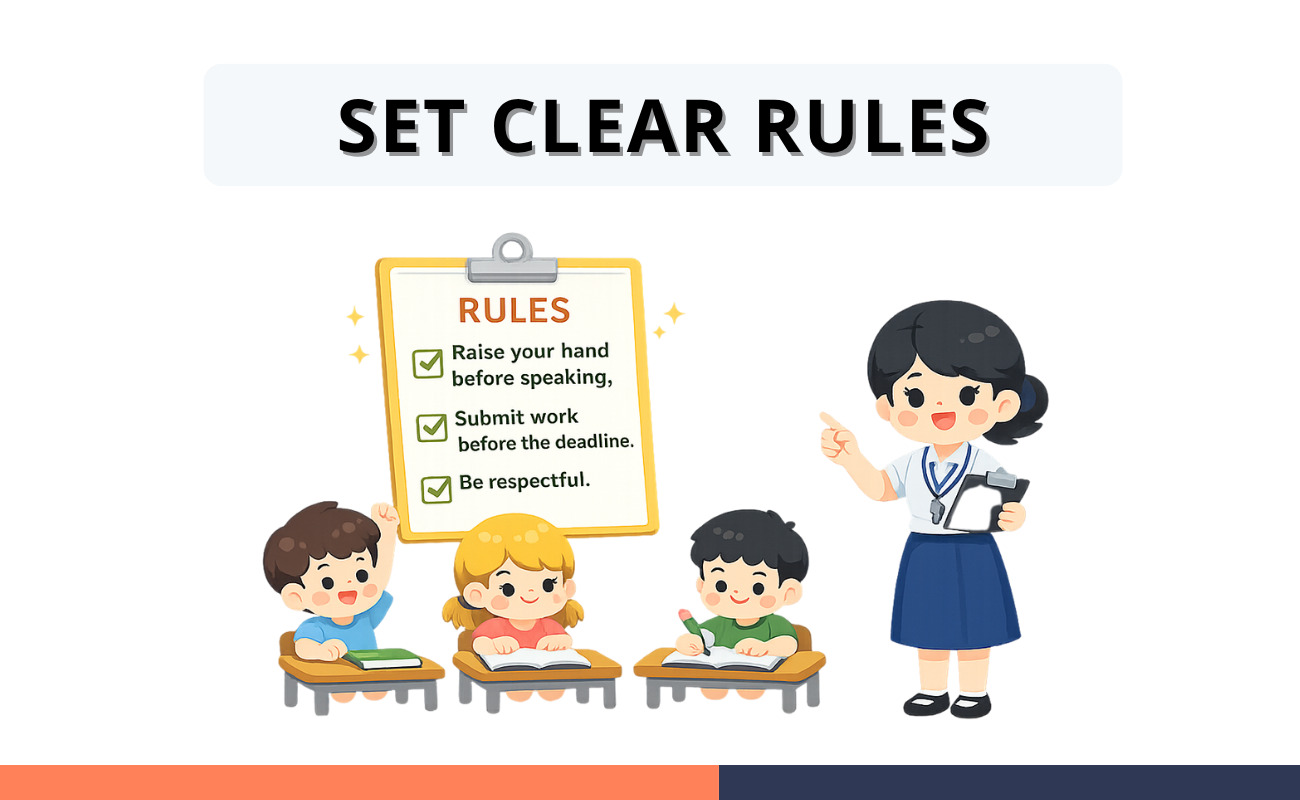 Classroom management clear rules example
For instance, instead of a vague “be respectful,” make it visible in action:
- “Raise your hand before speaking.”
- “Submit work before the deadline.”
2. Build simple routines
Routines are like shortcuts for your classroom: they save time, reduce confusion, and keep things moving smoothly. When students know what to expect and when to do it, the entire class operates more efficiently.Start with key routines that set the tone for the day:
- How students enter and exit the room
- What to do when they finish an assignment early
- How to ask for help
3. Give short instructions
Short, clear instructions help students understand tasks quickly and reduce confusion. The simpler your language, the easier it is for students to stay on track.For example, instead of saying “Please take a moment to look at the instructions on the board and begin your assignment,” simply say, “Look at the board and start your task.” It eliminates unnecessary details, guiding students directly to what they need to do.
4. Use positive reinforcement
Students thrive when they feel encouraged and recognized for their efforts. Positive reinforcement doesn’t have to be big rewards; it can be as simple as acknowledging a student’s good behavior with a quick, “Great job!” or “Thank you for following the rule!”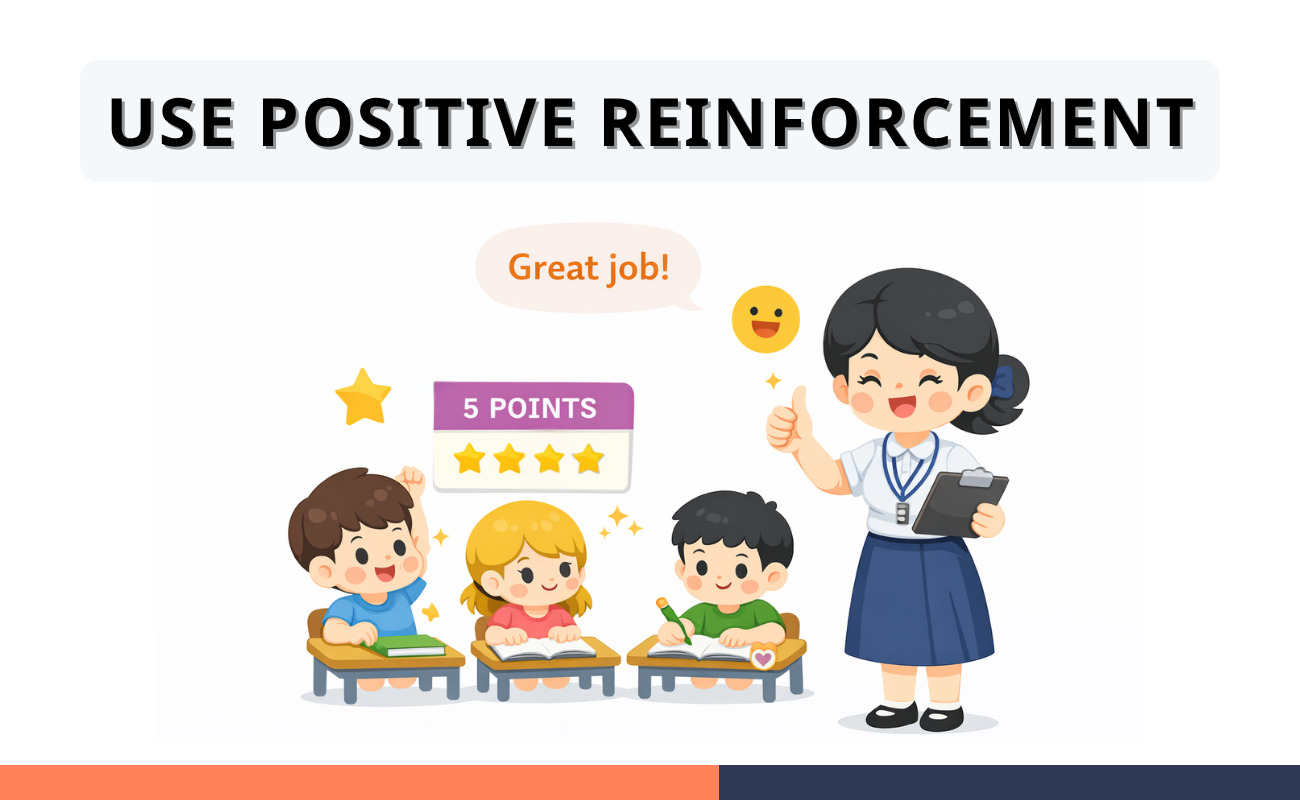 Classroom management clear rules example
For example, when a student raises their hand before speaking, simply say, “Thanks for raising your hand, great job!” You can also use a reward system where students earn points or stickers for following the rules.
5. Correct misbehavior calmly
When addressing misbehavior, staying calm sets the tone for how students respond. Reacting with frustration can escalate the situation, while a calm approach helps maintain control and respect.Instead of shouting or expressing frustration, try calmly stating the behavior and how it affects the class: “I need you to stop talking while I’m explaining this. Everyone else is listening.” Keeping your tone neutral and consistent helps maintain respect while addressing the issue.
6. Keep transitions structured
Transitions are the moments when students move between activities, and these moments can either help or disrupt the flow of the lesson. When transitions are smooth and structured, students know exactly what to do next, reducing wasted time and confusion.To keep things flowing smoothly, create clear signals for each transition. For example, you could say:
- "In five minutes, we’ll start the group activity."
- "When I say ‘time’s up,’ please put your materials away."
7. Differentiate tasks by student level
Not all students are at the same level of understanding or skill, so it’s crucial to adjust tasks based on their individual needs. This ensures students are neither overwhelmed nor bored, helping them make steady progress.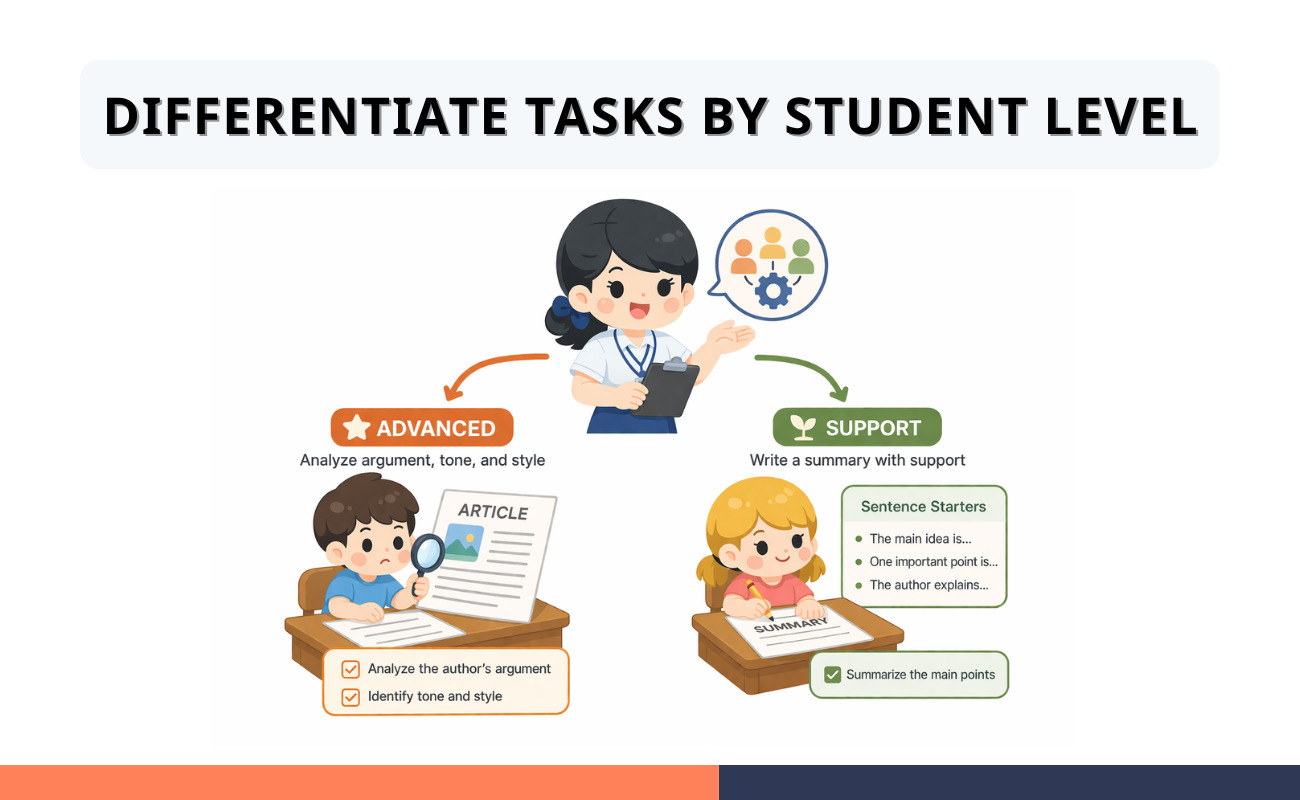 Classroom management task differentiation by level
For example, if you're teaching a writing assignment:
- Advanced students could analyze a complex article, focusing on the author’s argument, tone, and style.
- Struggling students might work on writing a paragraph that summarizes the article’s main points, using sentence starters or guiding questions.
Read more: How to improve English writing skills
8. Use regular low-stakes practice
Regular low-stakes practice allows students to reinforce learning without the pressure of high-stakes tests. It encourages continuous improvement and helps you assess students' understanding in real time, without adding stress.Incorporate activities like quizzes, small group work, or class polls throughout your lessons. A quick 5-minute review at the start or end of class can work well, whether that is a summary, a few multiple-choice questions, or a quick digital quiz with instant feedback.
9. Track homework and test completion
Tracking homework and test completion helps you spot patterns early and respond before students fall behind. By keeping track of which assignments are turned in on time and how students perform on tests, you can spot who needs extra help and who is on track.For instance, create a simple tracking system using a checklist or spreadsheet. Mark off when assignments are submitted and use it to identify any late submissions. For tests, focus on recurring areas where students struggle.
10. Review progress often
Regularly reviewing student progress helps reinforce learning and keeps students on track. It allows you to adjust your teaching strategies based on their needs and ensure they’re mastering the material.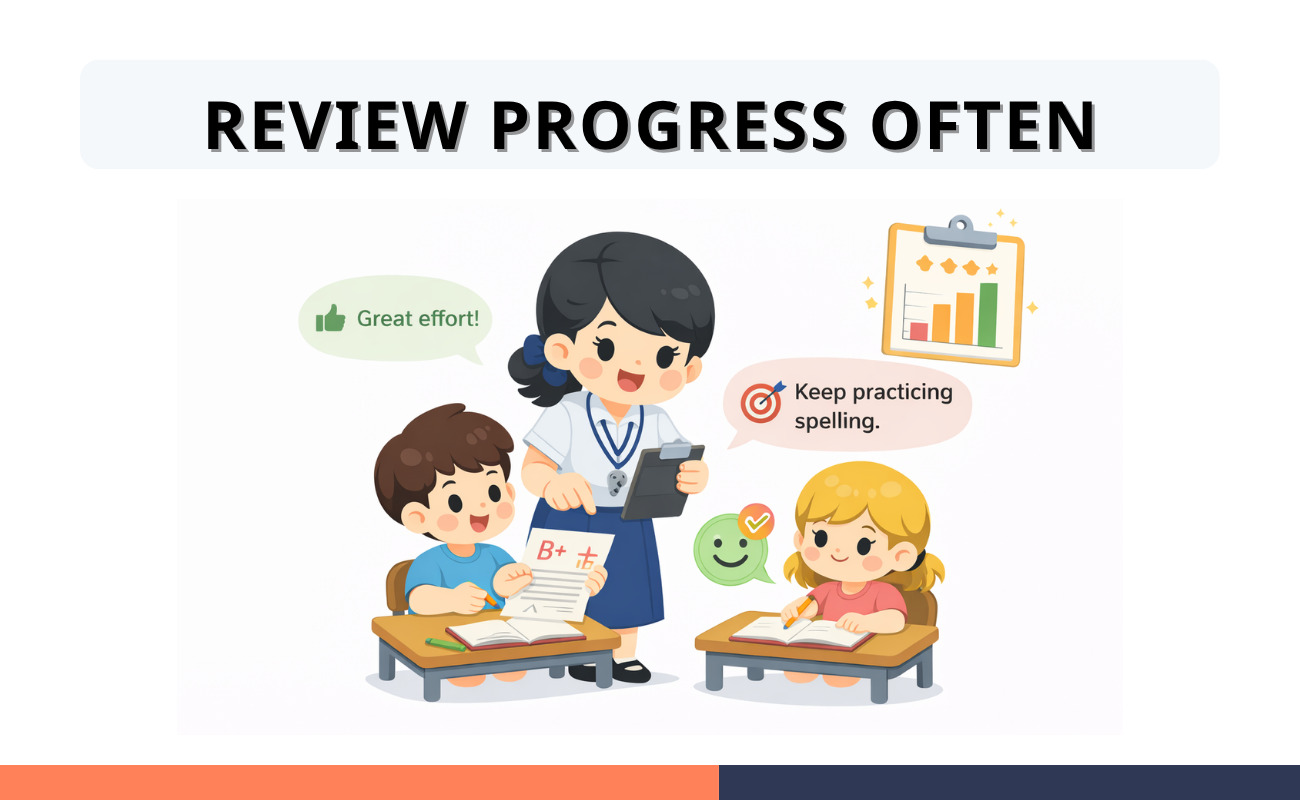 Classroom management student progress review
For example, after each assignment or test, review the results with students, highlighting their strengths and areas for improvement. You can also provide quick, actionable feedback to help them focus on specific aspects they need to work on.
See also: Study techniques for TOEIC & IELTS learners
Why These Strategies Are Hard to Maintain
Even strong classroom management strategies become hard to maintain when the workload grows. Here are some of the main challenges:- Large class sizes: Managing a large number of students makes it harder to track individual progress and behavior.
- Disorganized tasks and deadlines: When assignments and deadlines are not clearly organized, it’s easy for students to fall behind or miss important tasks.
- Inconsistent feedback: Giving timely and constructive feedback to each student can be overwhelming, especially with multiple assignments and different learning paces.
How Estudyme Supports Classroom Management
You already know what good classroom management looks like: clear rules, steady routines, regular follow-up. But can you actually keep all of that consistent across multiple classes, every single day?That’s where things usually fall apart.
Estudyme classroom management is built to solve exactly this gap, when everything starts slipping, and you can no longer keep track of it all.
Instead of juggling tasks, you get a clear system:
- Class & student organization: see every group, every level at a glance
- Task assignment: assign the right practice in seconds, not minutes
- Progress tracking: know who is stuck, not just who is late
- Deadlines & reminders: no chasing, no missed work
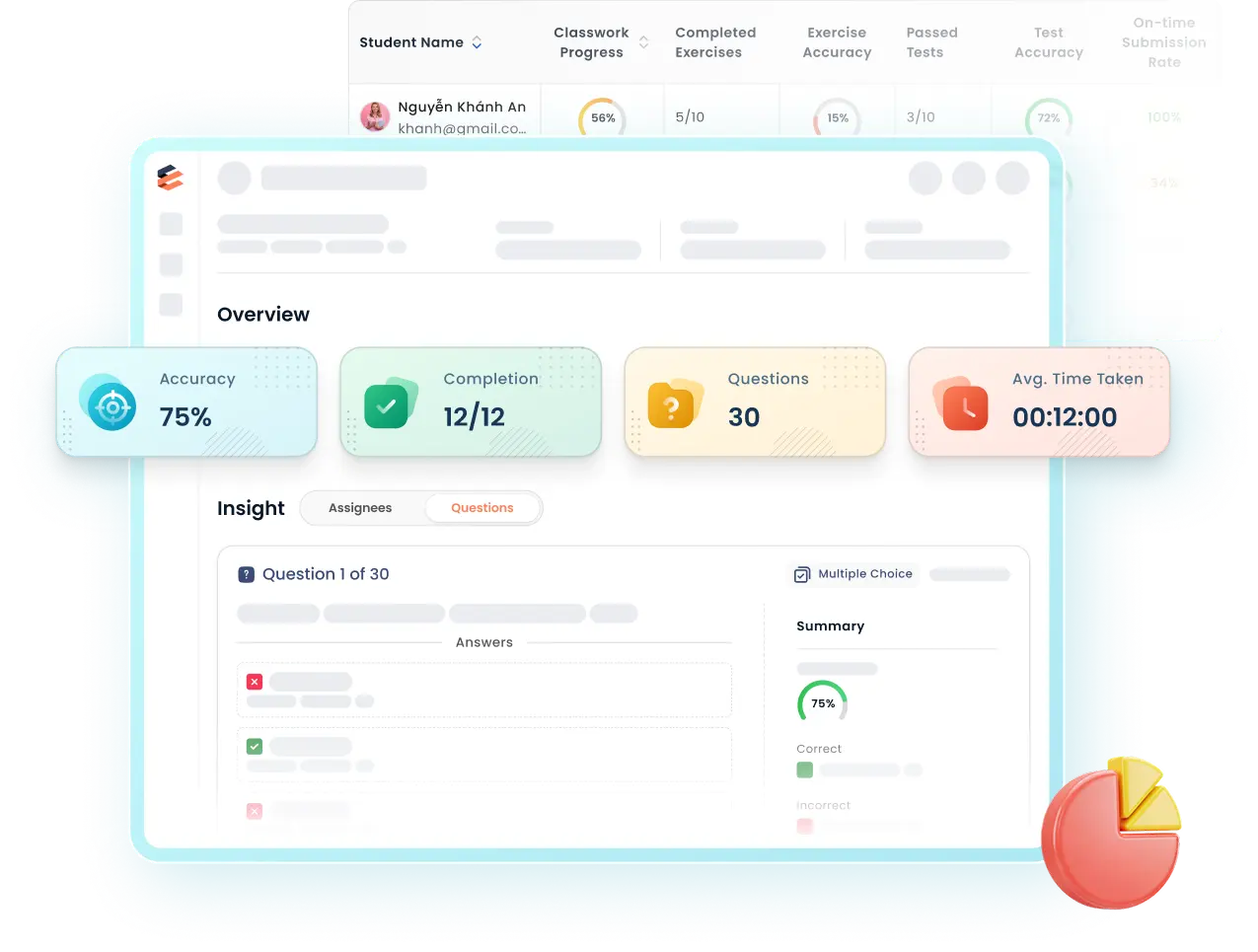 Estudyme classroom management dashboard overview
The impact shows up quickly in your day-to-day teaching.
You spend less time checking who submitted what, less time reminding students, and more time focusing on the lesson itself. At the same time, students know what to do, when to do it, and how they are doing, without needing repeated instructions.