
Top 5+ Best Study Techniques for TOEIC & IELTS Learner
Learning English for standardized tests like TOEIC and IELTS requires strategic approaches that maximize retention and skill development. To make real progress, you need study techniques that boost retention, sharpen your skills, and fit your learning style.
In this article, Estudyme will show you some of the best study techniques for TOEIC and IELTS learners. Whether you're focused on expanding vocabulary, improving grammar, or mastering test-specific strategies, we are so sure that these methods will elevate your preparation for the two certificates.
#1 Study Technique: Spaced Repetition Systems (SRS)
Besides practicing with TOEIC test, TOEIC learner should apply Spaced Repetition to learn vocabulary. The Spaced Repetition System represents one of the most scientifically-backed approaches to long-term retention. The Leitner method divides learning materials into different boxes based on your mastery level, with review intervals increasing as knowledge solidifies.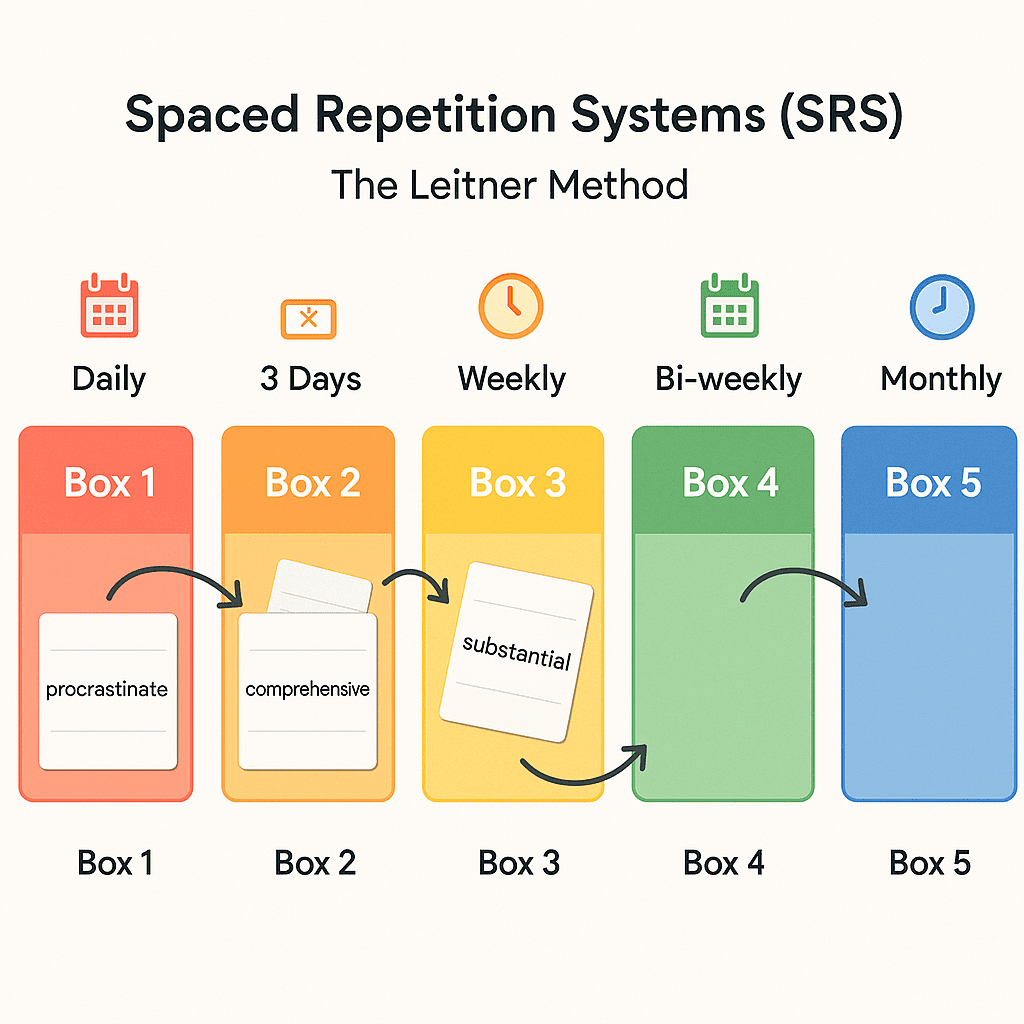 Spaced Repetition Systems (SRS) is amongst the best study techniques for TOEIC & IELTS learner
- Best suited for: Vocabulary acquisition, grammar patterns, and phrasal verbs Ideal learners.
- Both beginners and advanced students preparing for TOEIC Reading or IELTS Writing.
#2 Study Technique: Pomodoro Technique - Structured Focus Sessions
The Pomodoro Study Techniques break study sessions into 25-minute focused intervals followed by 5-minute breaks, with longer breaks after every fourth session. This method combats mental fatigue while maintaining high concentration levels.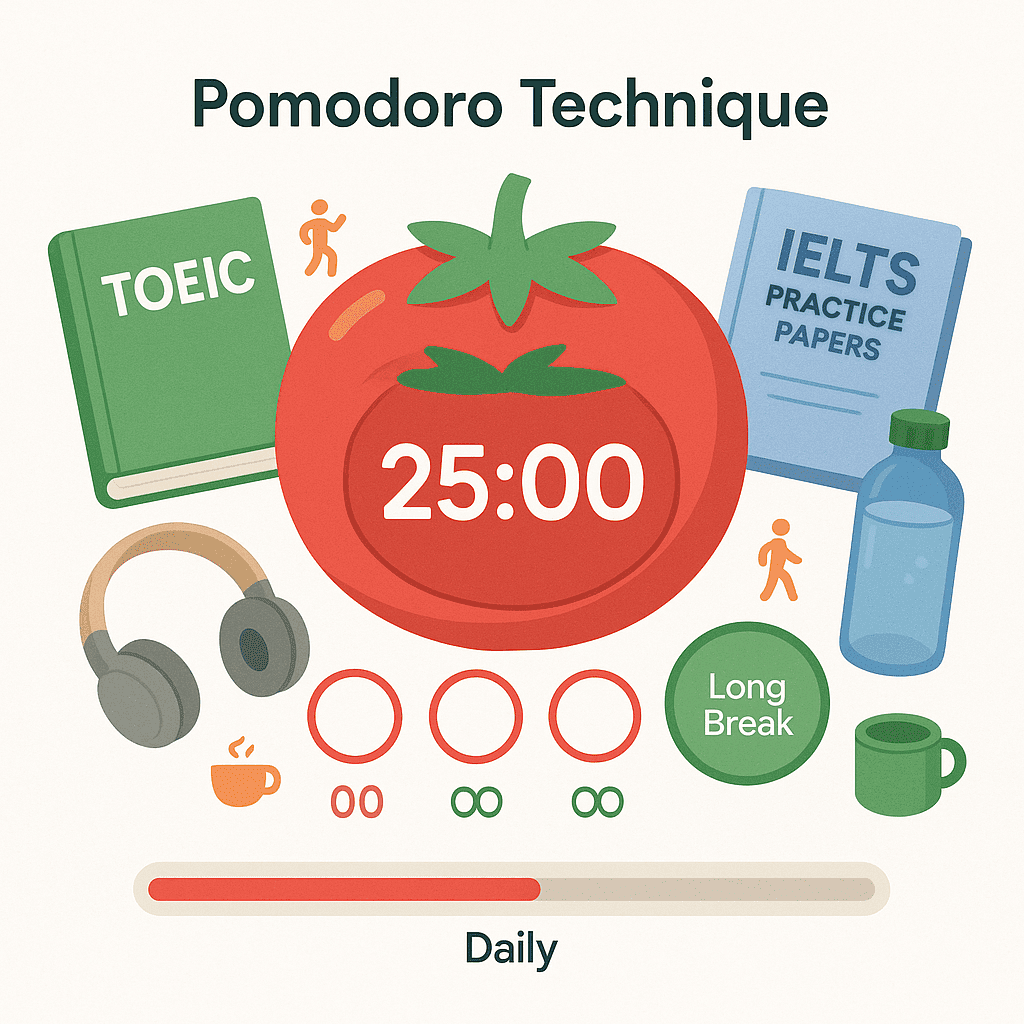 Pomodoro Technique is one of the best study techniques for TOEIC and IELTS preparation
- Best suited for: Reading comprehension, listening practice, and intensive grammar study.
- Ideal learners: Students struggling with attention span or overwhelming study schedules.
This technique prevents burnout during lengthy study sessions and helps establish consistent daily practice habits. Track your progress by counting completed "pomodoros" for different skills, creating measurable study goals.
#3 Study Technique: Mnemonics - Memory Enhancement Strategies
Mnemonics create memorable associations between new information and existing knowledge through acronyms, visual imagery, or word associations. This study techniques particularly excel in vocabulary retention and grammar rule memorization.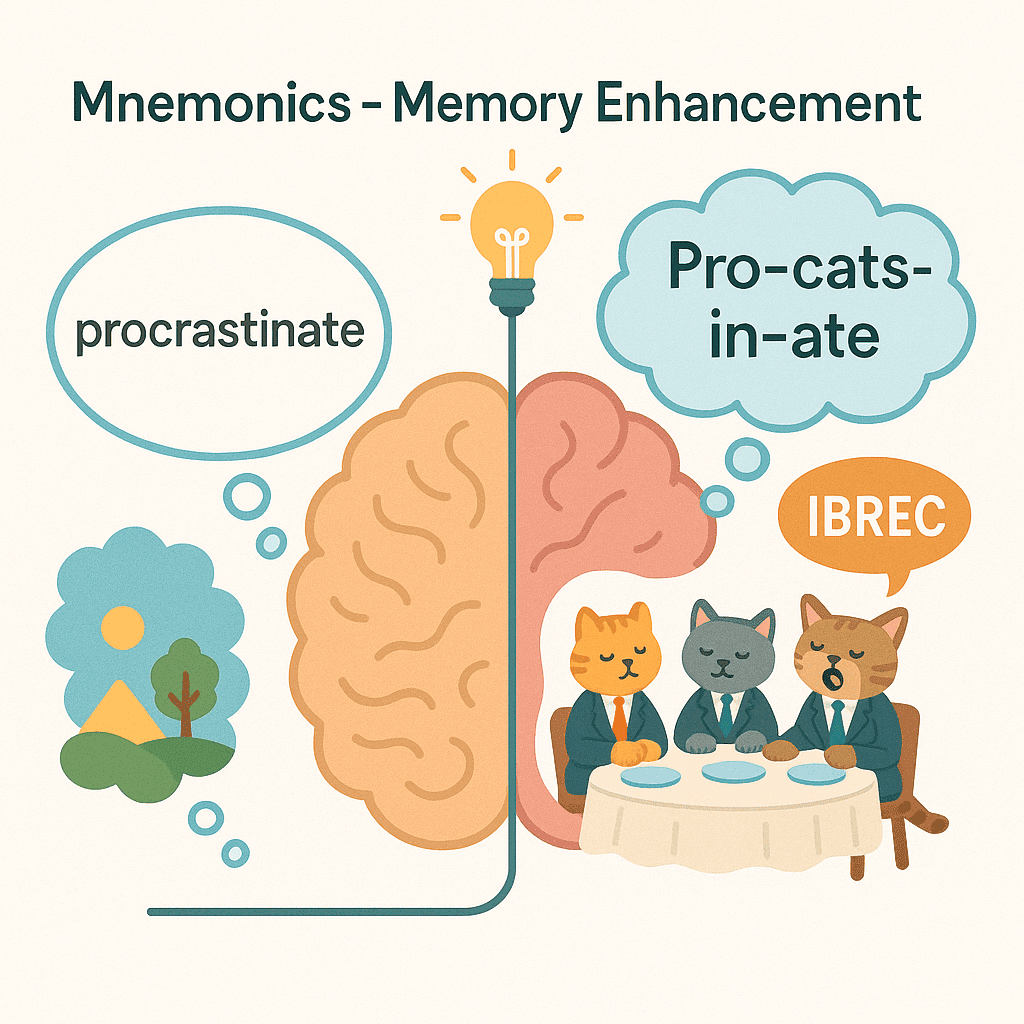 Use mnemonics to boost memory as a powerful study techniques for test prep
- Best suited for: Vocabulary building, irregular verb forms, and complex grammar structures.
- Ideal learners: Visual and auditory learners at all proficiency levels.
Vietnamese learners can create bilingual mnemonics, connecting English words with familiar Vietnamese sounds or concepts. This cultural bridge strengthens memory pathways and makes abstract vocabulary more concrete.
#4 Study Technique: Mind Mapping - Visual Knowledge Organization
Mind mapping transforms linear information into visual networks, showing relationships between concepts, vocabulary themes, and grammar points. This study techniques engage both analytical and creative thinking processes.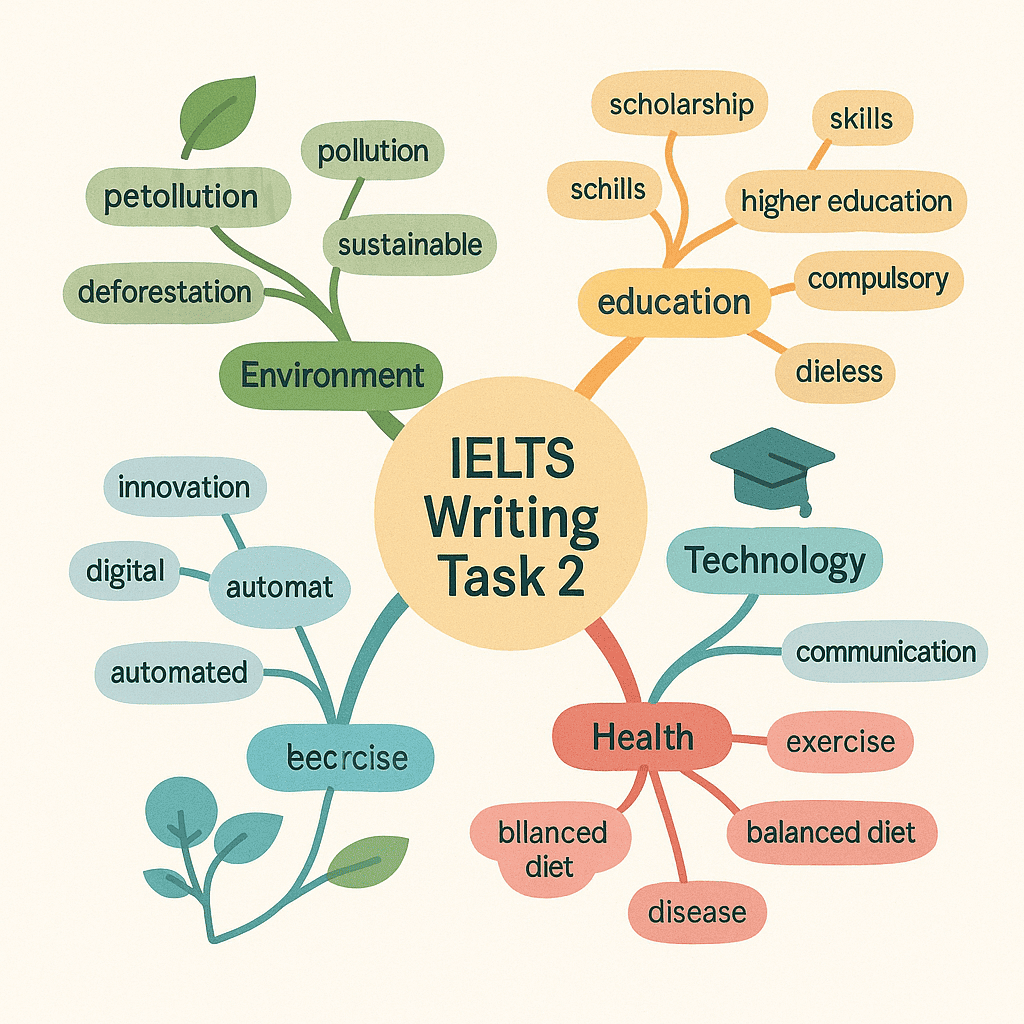 Organize ideas visually with mind mapping — a top study technique for TOEIC and IELTS learners
- Best suited for: Grammar system understanding, topic vocabulary expansion, and essay planning.
- Ideal learners: Visual learners and those seeking comprehensive topic mastery.
For TOEIC Business English, map workplace scenarios with related vocabulary, common phrases, and cultural contexts. This visual approach helps during speaking tests when you need quick access to relevant language.
#5 Study Technique: Chunking - Information Grouping Strategy
Chunking breaks complex information into smaller, manageable units that align with natural language patterns. This study techniques leverage how our brains naturally process and store information in meaningful clusters.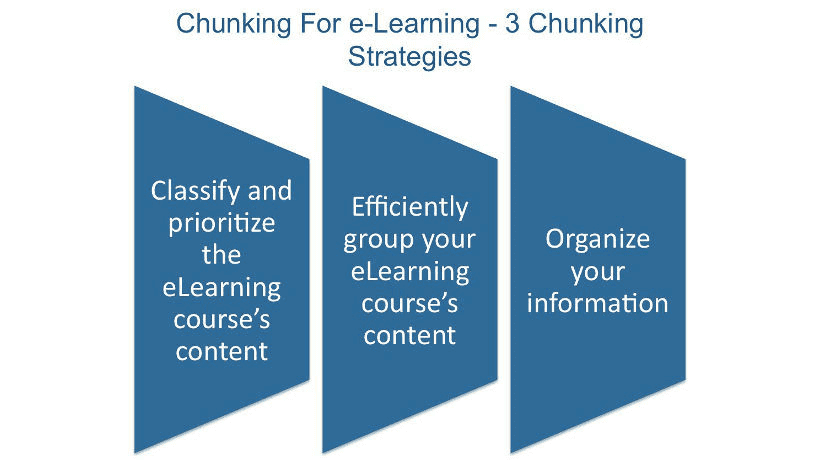 Chunking helps you group information efficiently and is one of the best study techniques for language learning
- Best suited for: Speaking fluency, listening comprehension, and natural phrase acquisition.
- Ideal learners: Students preparing for speaking tests and those seeking natural-sounding English.
Vietnamese speakers can chunk English phrases that express concepts requiring multiple words in Vietnamese, making expression more efficient and natural. Practice these chunks until they become automatic responses.
#6 Study Technique: Active Recall - Retrieval Practice
Active recall forces your brain to retrieve information from memory rather than simply recognizing it. This technique strengthens neural pathways and identifies knowledge gaps more effectively than passive review.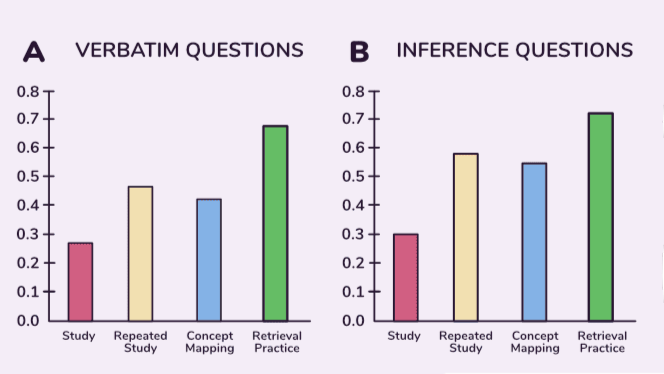 Active recall boosts memory through self-testing, a proven study technique
- Best suited for: All language skills, particularly vocabulary retention and grammar application.
- Ideal learners: Self-directed learners seeking to maximize study efficiency.
Use flashcards with questions like "How do you express disagreement politely?" rather than simply "Disagree." This approach builds productive language skills essential for speaking and writing tests.
#7 Study Technique: Shadowing - Audio Imitation Technique
Shadowing involves listening to native speakers and simultaneously repeating their words, matching rhythm, intonation, and pronunciation. This technique develops multiple skills concurrently while training your ear for natural speech patterns. Shadowing is an effective audio imitation study technique
- Best suited for: Pronunciation improvement, listening skills, and speaking fluency
- Ideal learners: Students preparing for speaking tests and those wanting accent reduction.
For both IELTS preparation and IELTS practice test, shadow academic lectures and news broadcasts to familiarize yourself with various accents and formal register. This technique builds confidence for the listening test while improving speaking naturalness.
#8 Study Technique: Suggestopedia - Relaxed Learning Environment
Being one of the most creative study techniques, Suggestopedia creates optimal learning conditions through relaxation, positive suggestion, and multi-sensory engagement. This method reduces anxiety while increasing retention through subconscious absorption. Suggestopedia is more creative than other study techniques
- Best suited for: Overcoming test anxiety, building confidence, and general language immersion
- Ideal learners: Anxious test-takers and those seeking stress-free learning experiences
Create "English corners" in your study space with motivational posters, target score reminders, and cultural elements from English-speaking countries. This environmental setup supports subconscious learning and maintains motivation.
Final Thought
Mastering English for exams like TOEIC and IELTS doesn't have to be overwhelming. By applying the right study techniques, you can boost your confidence, improve faster, and achieve your target score more efficiently. Ready to take your preparation to the next level? Try Estudyme’s TOEIC Test Pro – a smart learning platform using some of these study techniques and designed to help you practice effectively with personalized study plans, mock tests, and expert-reviewed materials. Make every study session count and start your journey with Estudyme today!