

Complete Guide to TOEFL Writing 2026 New Format & Samples
TOEFL Writing 2026 comes with major changes, shifting from traditional long essays to shorter, practical academic writing tasks. In this guide, EstudyMe helps you quickly understand what has changed, how the new format works, and how to adapt your writing strategy to achieve a high TOEFL score.
I. What Changed in TOEFL Writing in 2026?
Starting in 2026, TOEFL iBT Writing shifted from traditional long academic essays to shorter, communication-focused writing tasks. The new TOEFL format evaluates how effectively test takers communicate ideas in realistic academic situations rather than how well they produce extended essays.| Criteria | Old Format (Before 2026) | TOEFL Writing 2026 |
| Number of tasks | 2 tasks | 3 tasks |
| Task 1 | Integrated Writing (reading + listening + essay) | Build a Sentence (grammar & clarity) |
| Task 2 | Independent Essay (opinion essay) | Write an Email (academic/professional context) |
| Task 3 | — | Academic Discussion (classroom response) |
| Total time | ~50 minutes | ~23 minutes |
| Typical word count | 150–300+ words per task | 80–150 words per task |
| Main writing style | Academic essay writing | Short academic communication |
| Academic intensity | High (formal essays) | Moderate–high (practical academic use) |
- The traditional 300+ word Independent Essay has been removed.
- TOEFL Writing is no longer essay-based.
- The exam now prioritizes real academic interaction, especially Academic Discussion responses.
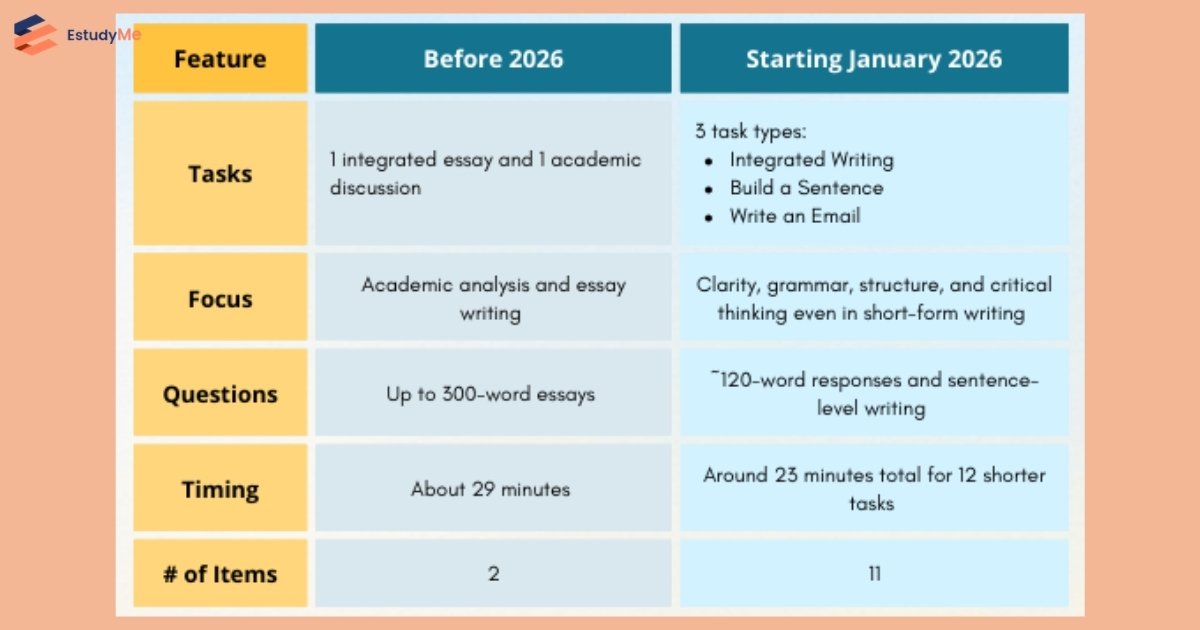 What Changed in TOEFL Writing in 2026?
Read more: Summary of Key Information about the TOEFL ITP Exam
II. TOEFL Writing Scoring Criteria
To perform well in TOEFL Writing, students must understand how responses are evaluated. ETS focuses less on length and more on communication effectiveness.| Core Criterion | What ETS Actually Looks For | What Students Should Do |
| Development | Complete, relevant responses with clearly explained ideas | Answer the exact question, state a clear main idea early, support with examples or reasons |
| Organization | Logical and easy-to-follow structure | Use clear progression: idea → explanation → example |
| Coherence | Smooth connection between sentences | Maintain one topic focus and use logical transitions |
| Language Use | Natural and appropriate English | Use precise vocabulary and varied sentence types |
| Grammar | Errors should not block understanding | Focus on agreement, tense consistency, articles, and punctuation |
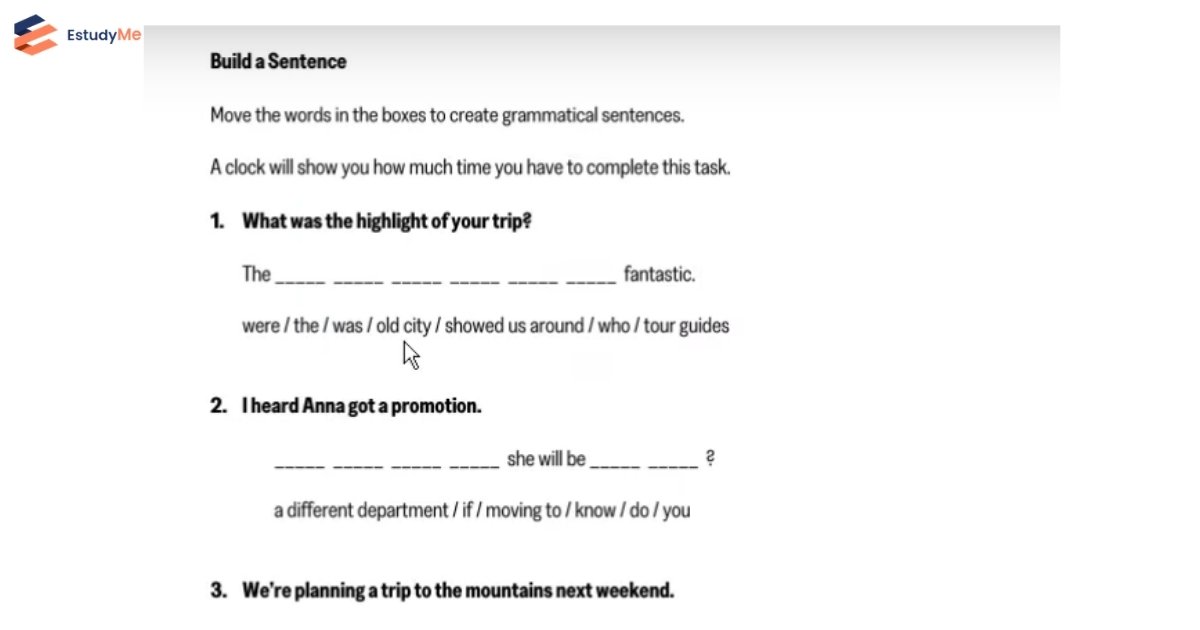 TOEFL Writing 2026 - Build a Sentence
III. Step-by-Step Strategies for TOEFL Writing 2026
The TOEFL Writing 2026 section evaluates how well you communicate ideas in realistic academic situations rather than how well you write long essays. Each task in TOEFL format measures a different communication skill, from sentence accuracy to professional interaction and academic discussion participation.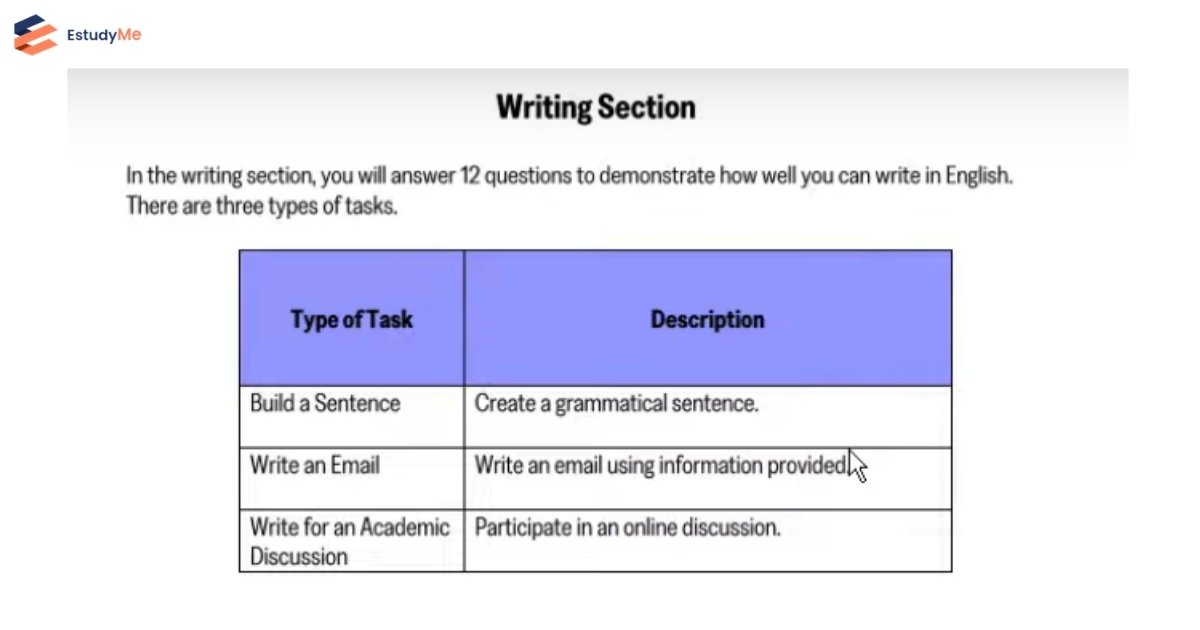 Step-by-Step Strategies for TOEFL Writing 2026
1. Build a Sentence
Unlike traditional writing tasks, Build a Sentence focuses on micro-level writing skills. Instead of developing ideas across paragraphs, you must demonstrate precise grammar control and logical sentence construction within a single clear statement. Success depends on understanding how English sentences naturally function, not simply arranging words mechanically.What this task actually tests:
| Skill Area | What It Means in Practice |
| Grammar control | Correct verb forms, agreement, and structure |
| Word order | Natural English sentence patterns |
| Meaning clarity | The sentence must express logical academic meaning |
| Language accuracy | Clear and natural expression |
- Rearranging scrambled words into a sentence
- Correcting incorrect word order
- Combining phrases into one meaningful statement
- Building sentences using modifiers or clauses
- Identify sentence roles: subject, verb, object, modifiers
- Recognize standard Subject–Verb–Object patterns
- Practice forming relative clauses and descriptive phrases
- Check meaning first, grammar second
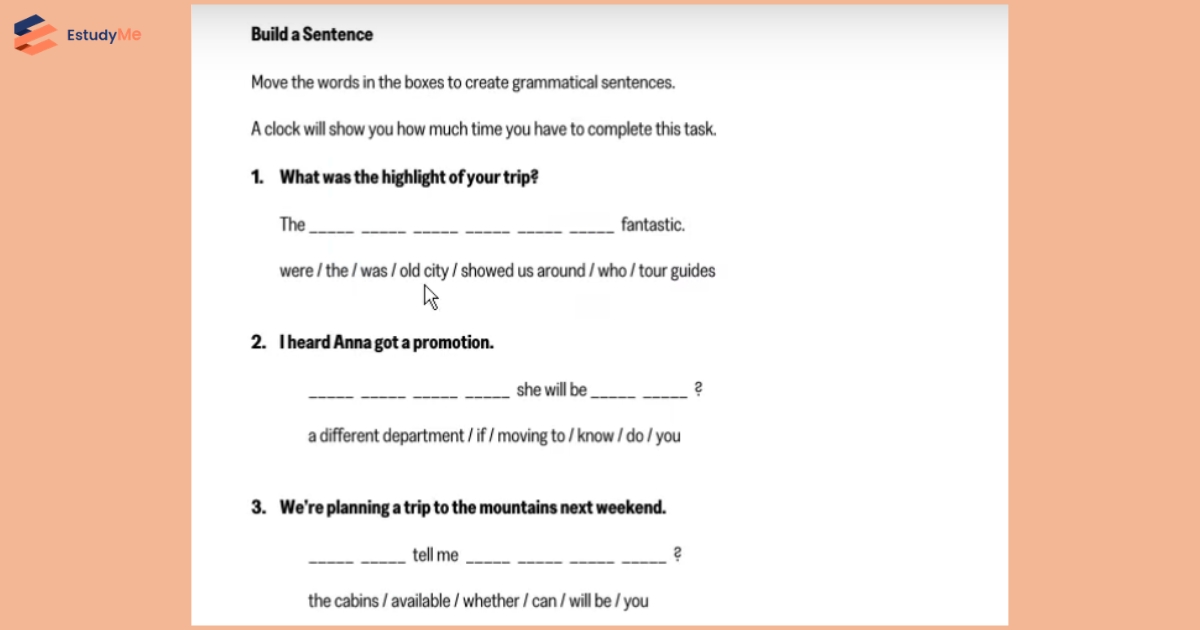 TOEFL Writing Build a sentence
2. Write an Email
The Write an Email task reflects real academic communication that students experience at university. Instead of writing formal essays, you must respond to a practical situation clearly, politely, and efficiently. The scoring emphasizes clarity of purpose and organization more than sophisticated vocabulary.What this task actually tests:
| Skill | What ETS Evaluates |
| Purpose clarity | Whether your reason for writing is immediately clear |
| Organization | Logical flow of information |
| Tone | Professional but natural communication |
| Effectiveness | Clear request or proposed solution |
- Requesting a deadline extension
- Asking for clarification about assignments
- Explaining scheduling or academic problems
- Suggesting solutions to campus issues
- Follow a simple email structure: greeting → purpose → explanation → request → closing
- Maintain a polite and respectful tone without sounding overly formal
- Write concisely and avoid unnecessary background details
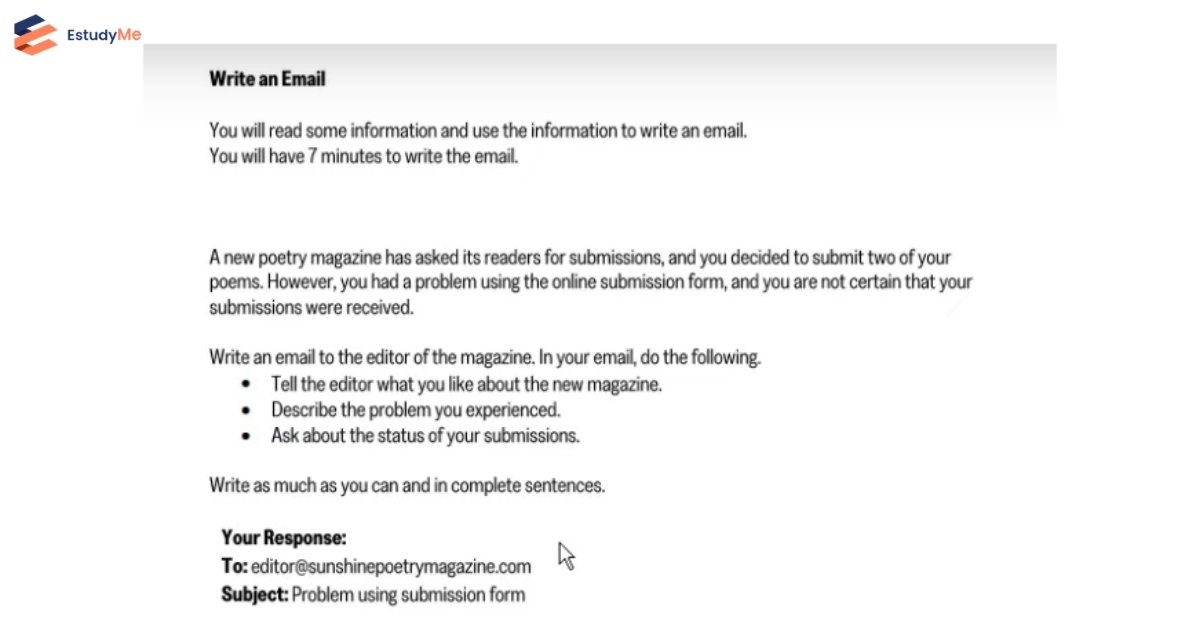 TOEFL Writing 2026 - Write an Email
3. Write for an Academic Discussion
This task represents the biggest conceptual change in TOEFL Writing 2026. Instead of presenting a long independent essay, you participate in a short academic discussion by responding to a professor’s question and reacting to other students’ opinions. The focus is on interaction and clarity rather than length.What this task actually tests:
| Evaluation Focus | What High Scores Show |
| Opinion clarity | Position stated immediately |
| Relevance | Direct response to discussion topic |
| Idea development | Clear reasoning and explanation |
| Language control | Accurate and natural English usage |
- Technology in education
- Online vs. in-person learning
- Environmental responsibility
- University policies or student life
What to focus on when preparing:
- State your opinion clearly in the first sentence
- Develop one or two strong reasons rather than many weak ideas
- Refer to another student’s viewpoint to show interaction
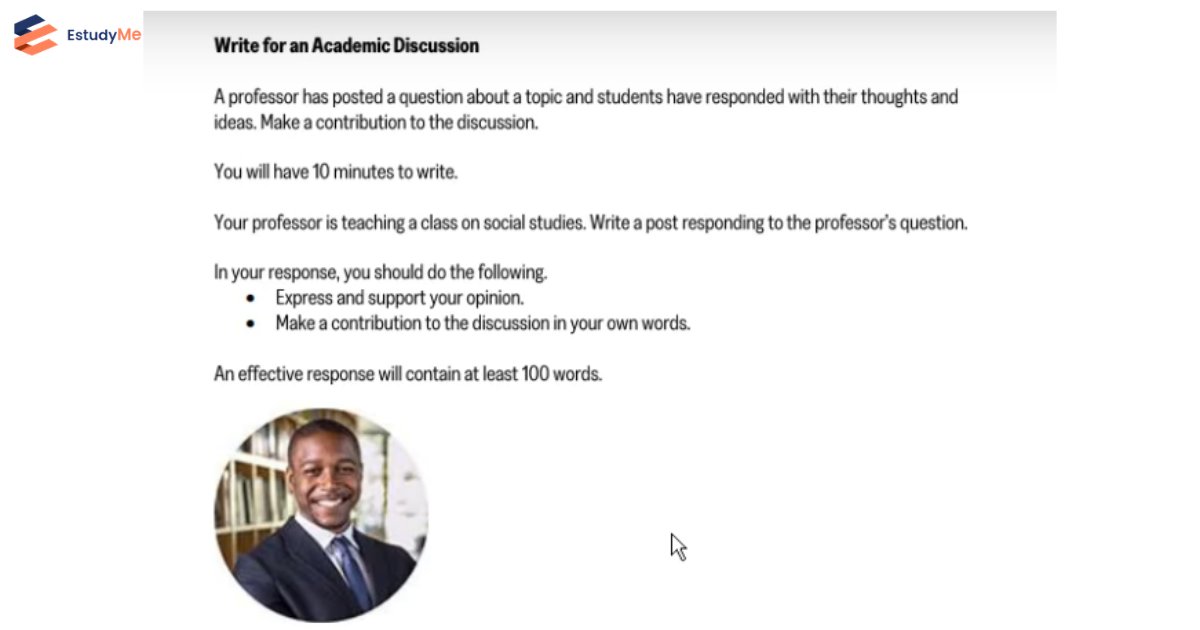 TOEFL Writing 2026 - Write for an Academic Discussion