
Top 5 Best Practical Classroom Management Plan Examples In 2026
Even a strong lesson can feel messy when the class has no clear system. A classroom management plan gives that system. This guide breaks down 5 practical examples that help teachers organize routines, manage classwork, and support students better with Estudyme.
I. What is a classroom management plan?
A classroom management plan is a practical framework that helps teachers organize how a class works each day. It sets clear expectations for behavior, routines, communication, learning tasks, and student support.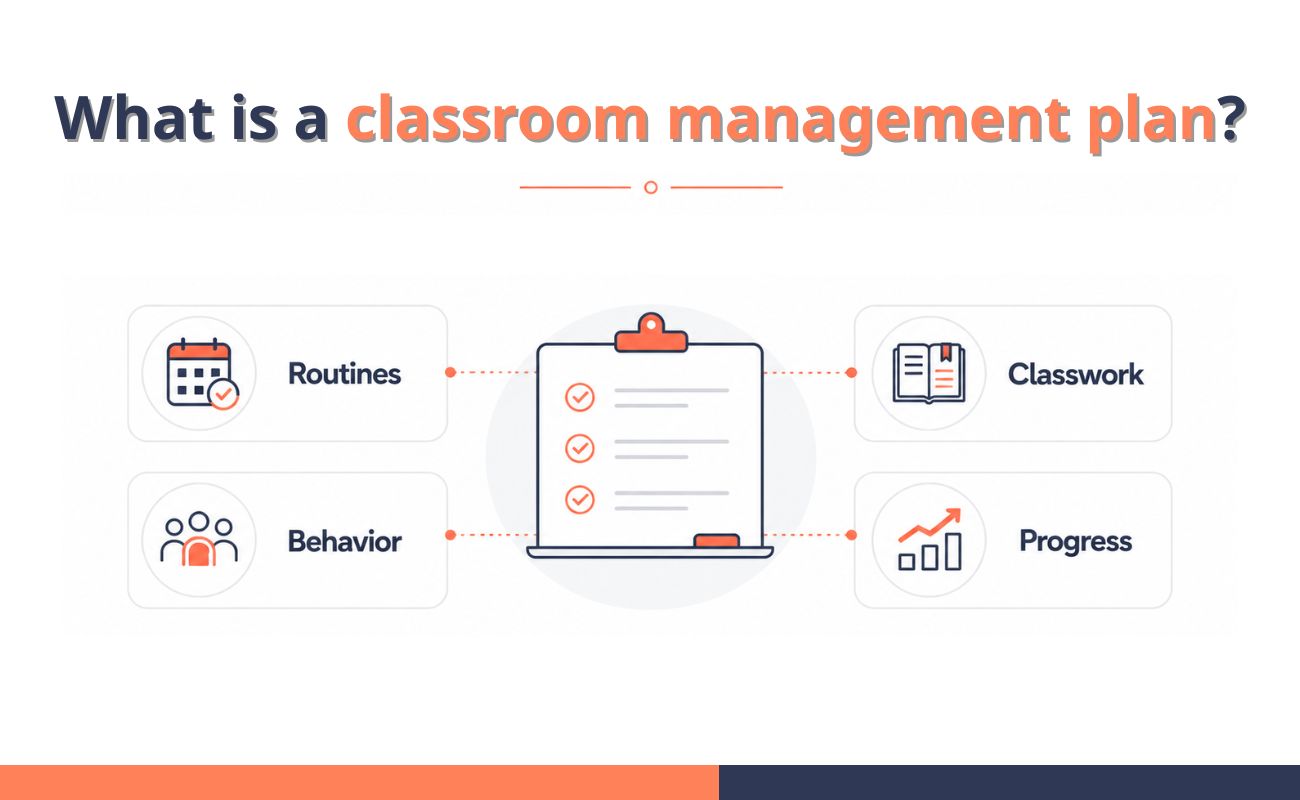 What is a classroom management plan?
A strong plan helps teachers create a classroom where students know:
- What they should do
- How they should participate
- When assignments are due
- Where to find learning materials
- How their progress will be checked
III. 5 practical classroom management plan examples
Let’s look at five classroom management plan examples that fit different teaching situations.1. PBIS classroom management plan - Elementary
A positive behavioral interventions and supports (PBIS) classroom management plan works well in elementary classes as young students need behavior to be taught early, instead of corrected after something goes wrong.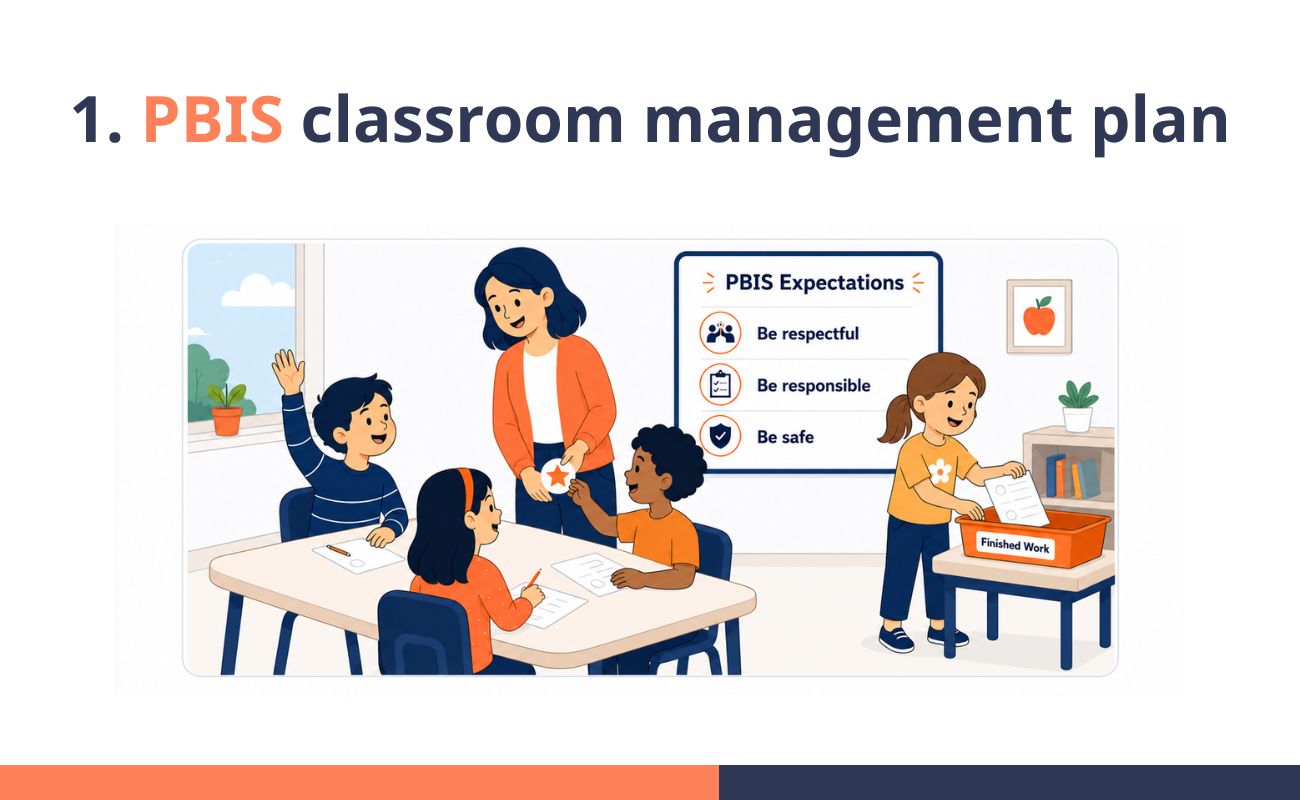 PBIS classroom management plan
A simple PBIS plan can begin with 3-5 positive expectations, such as:
- Be respectful
- Be responsible
- Be safe
- Put your worksheet in the right tray
- Raise your hand before speaking
- Clean up your desk before leaving
- Finish the task before choosing a quiet activity
2. Love and Logic classroom management plan - Middle school
Middle school students often want more say in what they do, so a Love and Logic classroom management plan can work well at this stage. This plan uses calm language, limited choices, and logical consequences to help students take responsibility for their own behavior.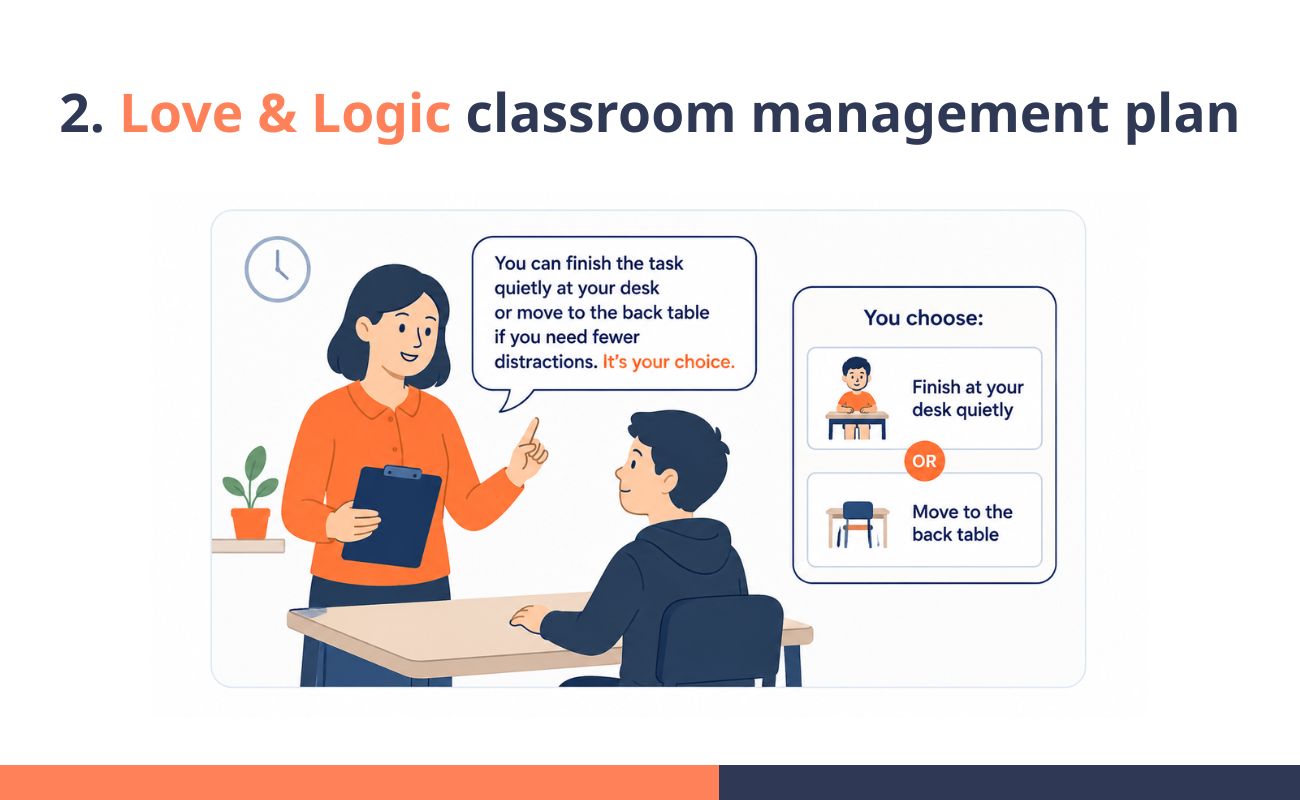 Love and Logic classroom management plan
The teacher should give choices that are both acceptable. For example:
- You can finish the task quietly at your desk.
- You can move to the back table if you need fewer distractions.
- You can complete the missing part during break if class time is not used well.
The tone matters. This helps reduce power struggles because students still have a choice, but the teacher keeps control of the learning space.
3. Structured classroom management plan - Test prep classes
A structured classroom management plan fits test prep classes because students need focused practice, clear timing, and regular feedback. Each lesson should help them know what skill they are training, how the task will be done, and what result they need to improve next.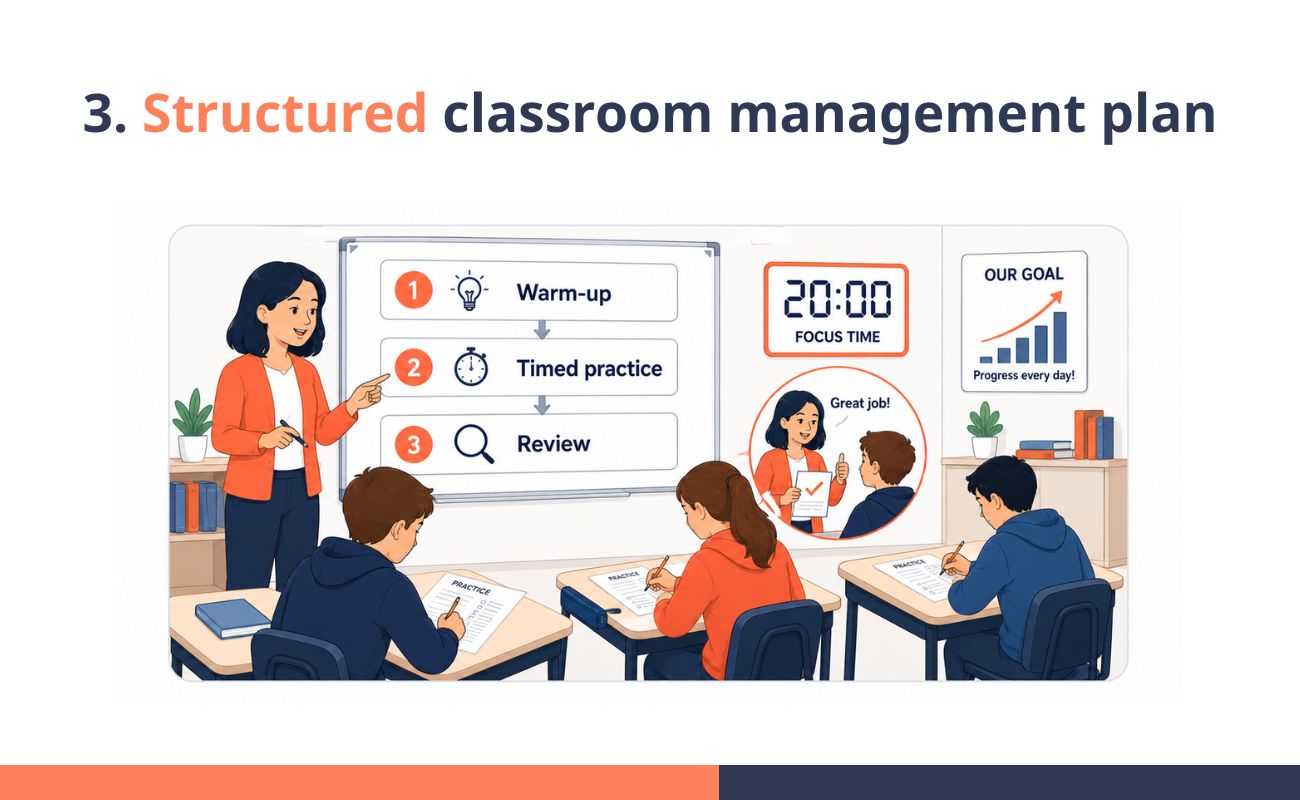 Structured classroom management plan
A structured plan can follow a simple lesson flow:
- Students start with a short review task.
- The teacher explains one skill or question type.
- Students complete timed practice.
- The class reviews common mistakes.
- Each student notes one thing to improve next time.
4. Inclusive classroom management plan - Special education
An inclusive classroom management plan helps teachers support students who may learn, communicate, or respond to classroom routines in different ways. In special education, the plan should make each step of the lesson easier to understand.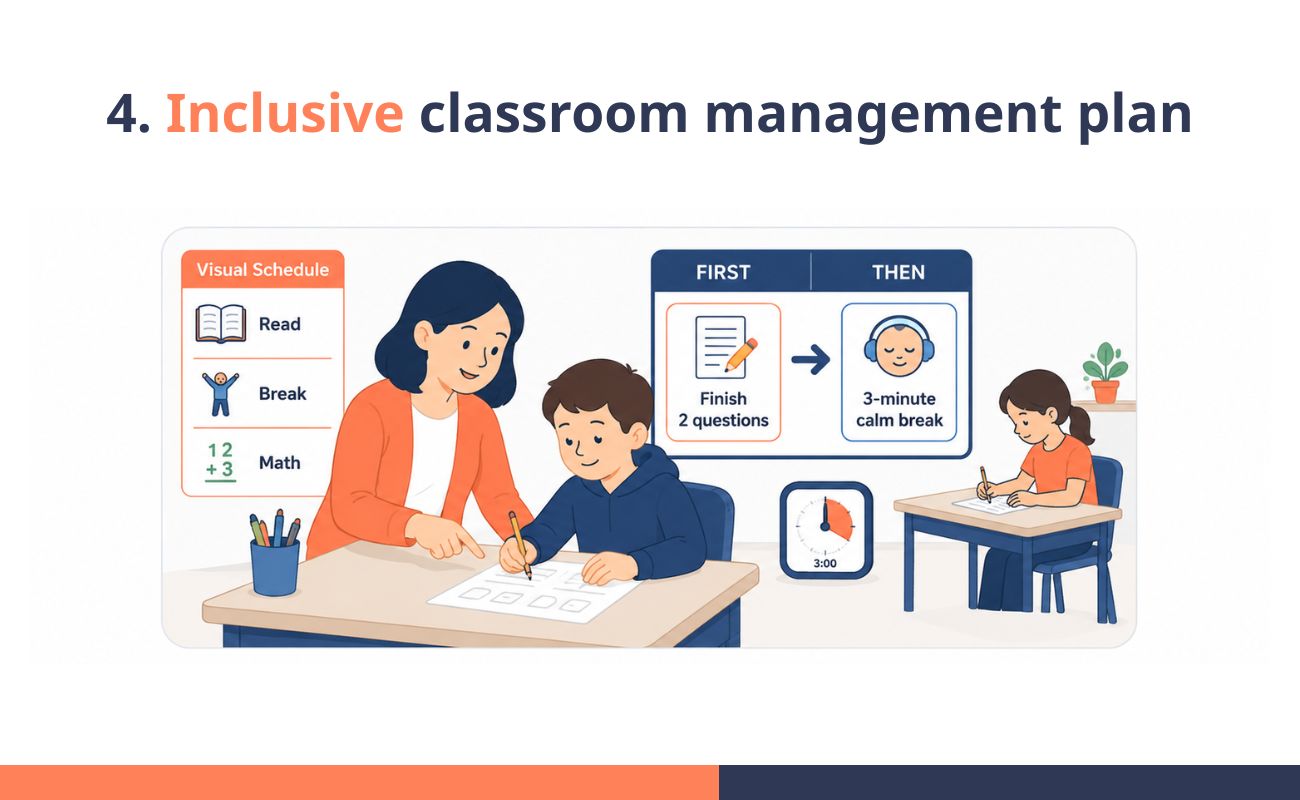 Inclusive classroom management plan
The teacher can prepare support before the student feels lost or overwhelmed. A simple plan may include:
- The class uses a visual schedule every day.
- The teacher gives one instruction at a time.
- Students can take short movement breaks.
- A timer shows when an activity will end.
- Support staff follow the same response plan.
5. Digital classroom management plan - Online and hybrid classes
A digital classroom management plan keeps online and hybrid classes clear for students. The biggest risk in these classes is confusion. Students may miss tasks because the link, file, deadline, or instruction is posted in different places.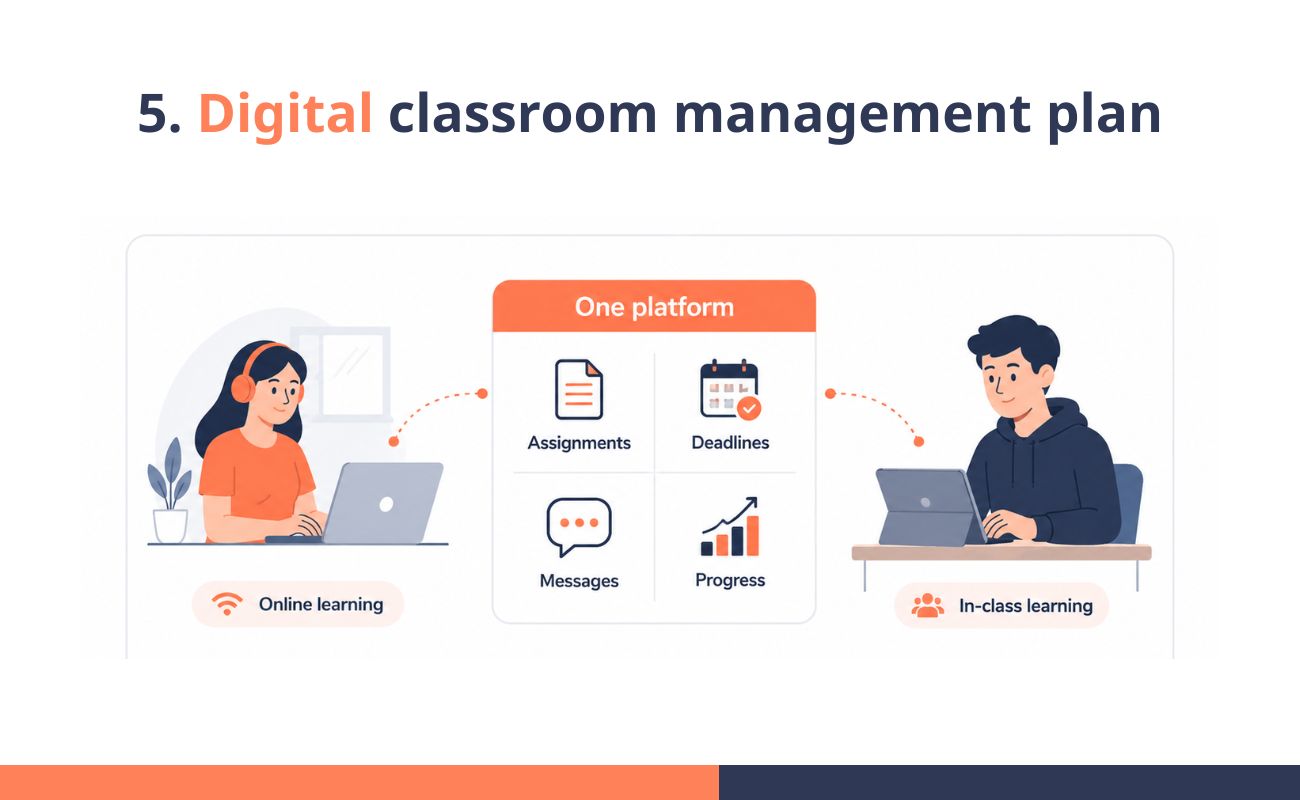 Digital classroom management plan
A practical plan should keep everything simple:
- Students join the class through one main link.
- Assignments are posted in one fixed place.
- Each task has a deadline and short instructions.
- Students know how to ask questions online.
- The teacher checks who has joined or submitted work.
See also: Online class management
IV. How Estudyme supports your classroom management plan
A classroom management plan should not stay on paper. It should show up in how teachers create classes, assign work, track progress, and support students every day. That is where Estudyme Classroom Management can make the plan easier to run.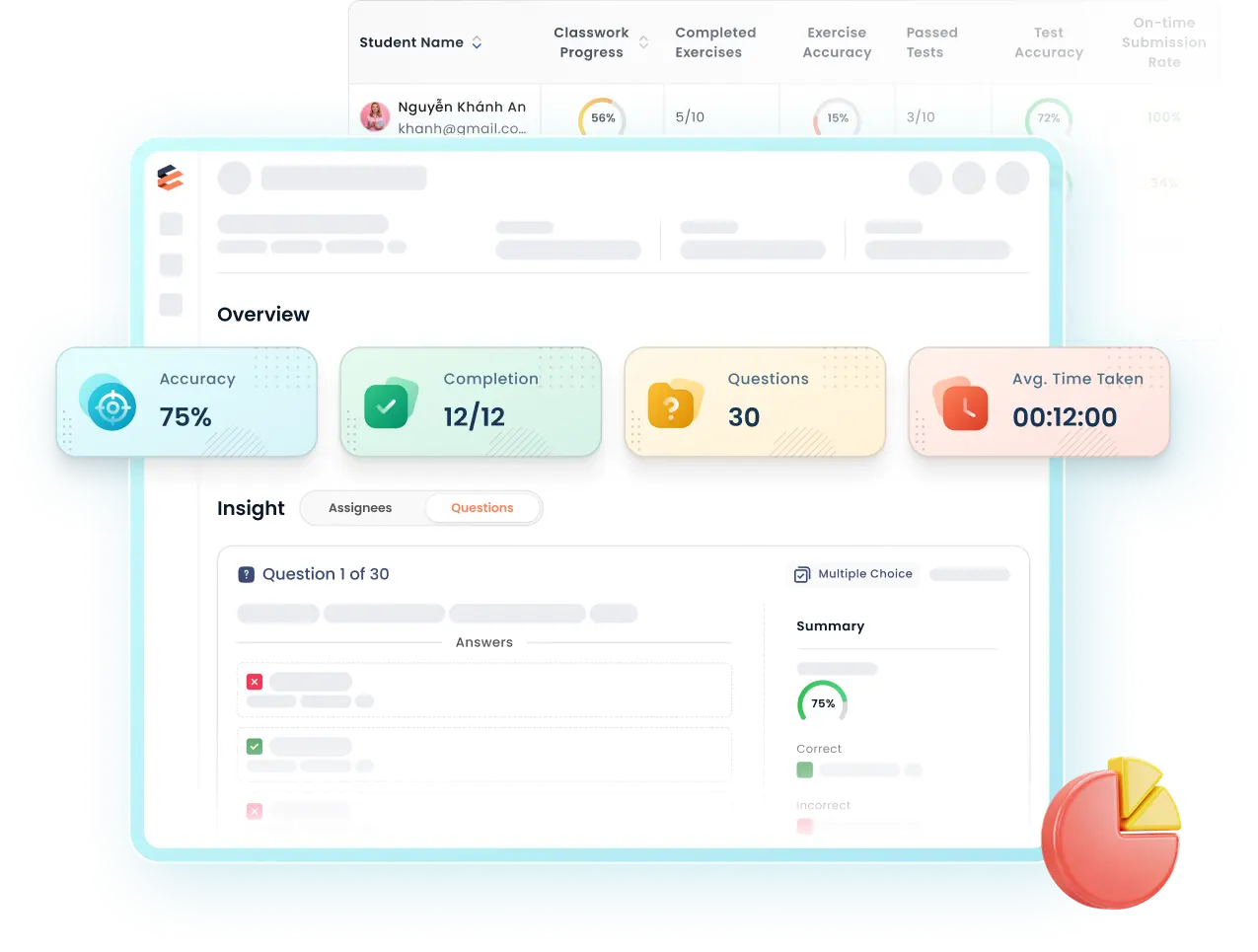 Estudyme supports your classroom management plan
Estudyme gives educators and learning organizations one centralized platform to create, manage, and monitor classes. It is trusted by 1M+ teachers and learners worldwide.
With Estudyme, teachers can:
- Create classes and manage class status quickly.
- Add students and control class access.
- Assign exercises and tests with deadlines, time limits, and attempt settings.
- Upload documents, slides, and videos for each class.
- Track participation, completion, results, strengths, and learning gaps in real time.
Teach with clarity, track with Estudyme!