A long TOEIC word list can feel overwhelming, but the right structure makes it far easier to manage. This guide brings together 200+ essential TOEIC vocabulary by topic, with clear meanings and practical examples from common test situations. Let’s dive in.
I. Benefits of learning TOEIC vocabulary by topic
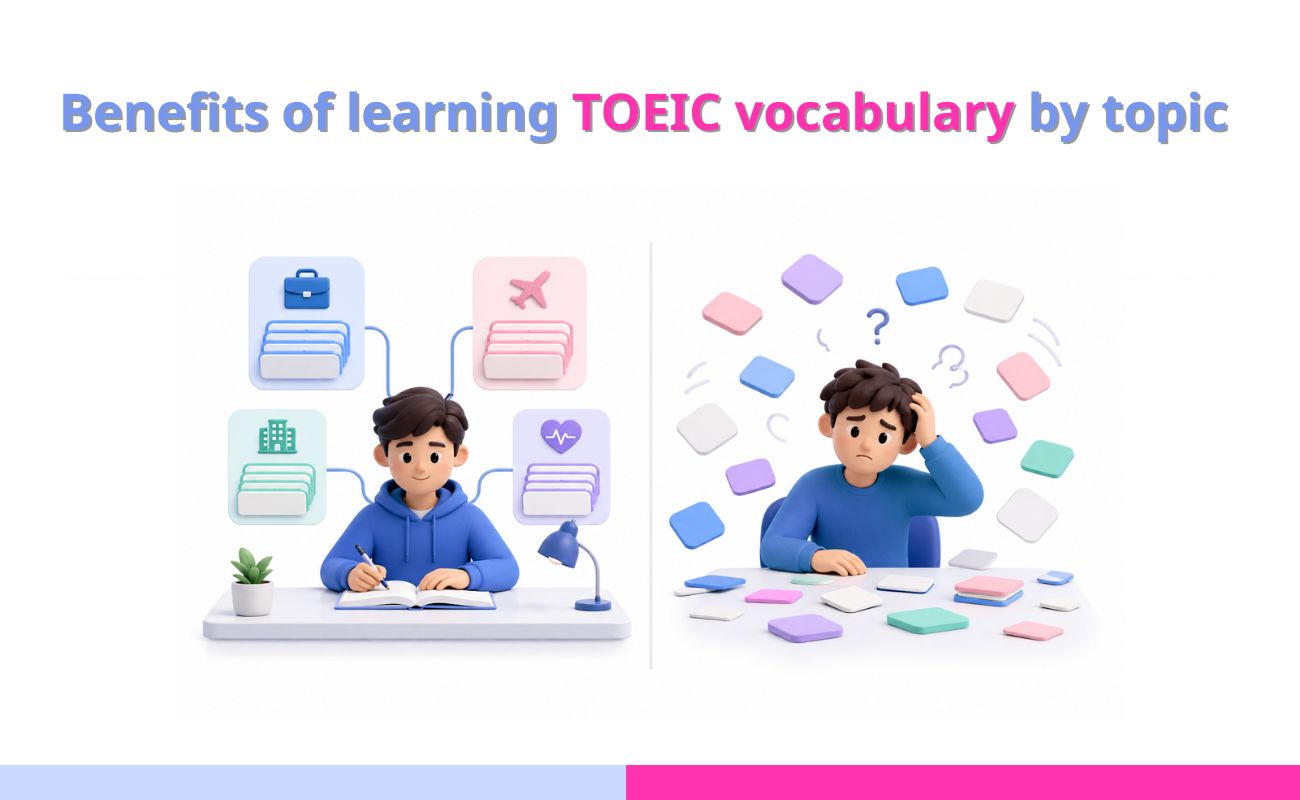
You will find TOEIC vocabulary by topic much easier to learn because every word comes with a practical reason to remember it.Benefits of learning TOEIC vocabulary by topic
You recall words more quickly: Vocabulary linked to a familiar situation is easier to retrieve than isolated items. A hotel question, for example, can immediately bring related words such as reservation, vacancy, and check-in to mind.
You understand how words are actually used: TOEIC rarely tests vocabulary without context. Topic-based study shows which words commonly appear together, such as submit an application, meet a deadline, or process a payment.
You can distinguish similar terms more accurately: Words with close meanings often belong to different situations. A focused topic makes it easier to see why fee, fare, rate, and charge are not always interchangeable.
You review with a clear purpose: Each topic becomes a manageable study unit, so you can identify weak areas, revise them efficiently, and avoid wasting time on vocabulary you already know.
You follow TOEIC questions more easily: Familiarity with a topic helps you anticipate the language used in conversations, announcements, emails, and reports, which improves both comprehension and response speed.
II. 200+ essential TOEIC vocabulary by topic
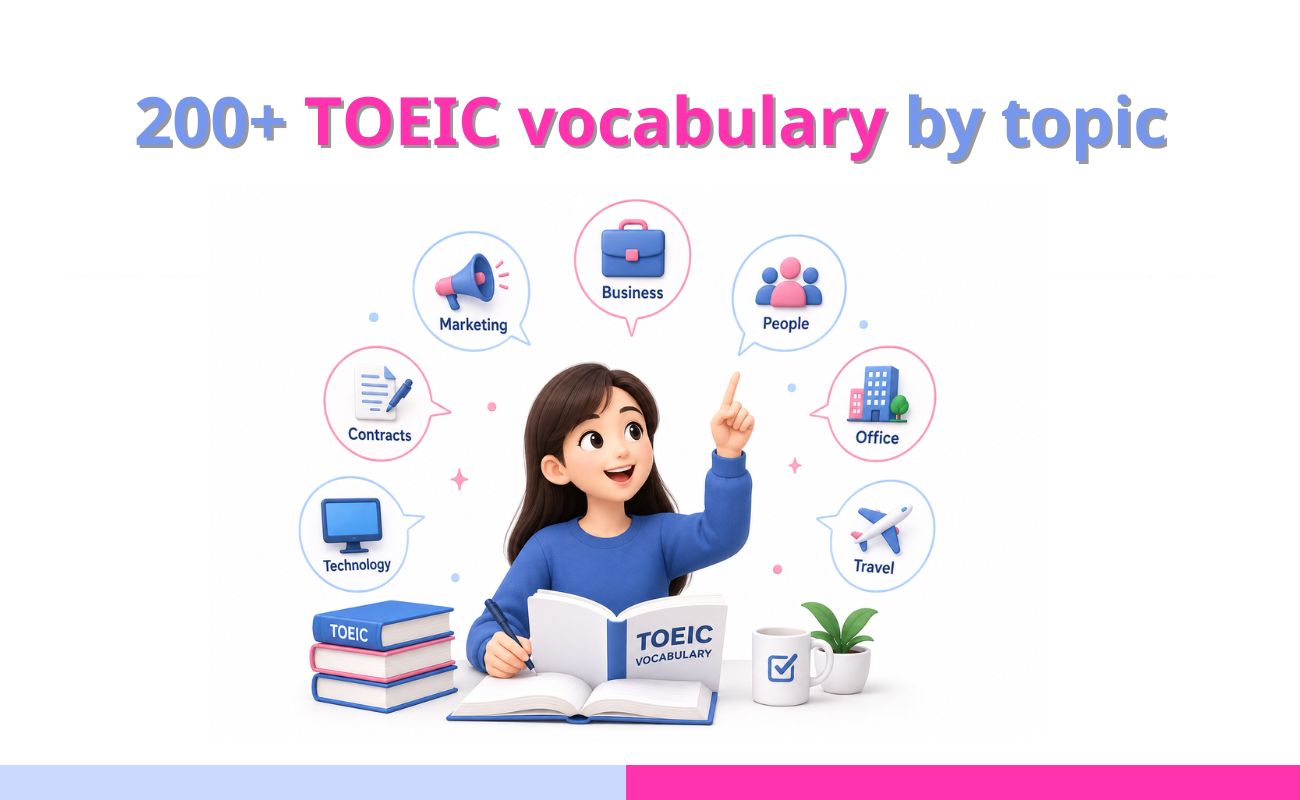
To make your study more manageable, we have grouped 200+ essential TOEIC vocabulary by topic into 12 familiar areas. 200+ essential TOEIC vocabulary by topic
1. Contracts
Let’s start with the contract terms you are most likely to see in TOEIC emails, notices, and business documents.
Word
Part of speech
Pronunciation
Meaning
contract
noun
/ˈkɑːntrækt/
a formal legal agreement
agreement
noun
/əˈɡriːmənt/
an arrangement accepted by all parties
clause
noun
/klɔːz/
a specific section of a contract
provision
noun
/prəˈvɪʒən/
a rule or condition in an agreement
party
noun
/ˈpɑːrti/
a person or company in an agreement
obligation
noun
/ˌɑːbləˈɡeɪʃən/
something a person is required to do
binding
adjective
/ˈbaɪndɪŋ/
legally required to be followed
valid
adjective
/ˈvælɪd/
legally acceptable and effective
negotiate
verb
/nɪˈɡoʊʃieɪt/
to discuss terms before reaching an agreement
sign
verb
/saɪn/
to write your name to approve a document
approve
verb
/əˈpruːv/
to formally accept or authorize something
amend
verb
/əˈmend/
to make an official change to a contract
renew
verb
/rɪˈnuː/
to extend a contract for another period
expire
verb
/ɪkˈspaɪər/
to reach the end of a valid period
terminate
verb
/ˈtɜːrmɪneɪt/
to formally end a contract
comply
verb
/kəmˈplaɪ/
to act according to a rule or agreement
breach
noun
/briːtʃ/
a failure to follow a contract
enforce
verb
/ɪnˈfɔːrs/
to make sure an agreement is obeyed
2. Marketing
You will come across this marketing vocabulary whenever TOEIC questions discuss products, customers, and promotional activities.
Word
Part of speech
Pronunciation
Meaning
advertise
verb
/ˈædvərtaɪz/
to promote a product or service
advertisement
noun
/ˌædvərˈtaɪzmənt/
a message that promotes something
brand
noun
/brænd/
a company’s product identity
campaign
noun
/kæmˈpeɪn/
a planned series of promotional activities
commercial
noun
/kəˈmɜːrʃəl/
an advertisement on television or radio
competitor
noun
/kəmˈpetɪtər/
a company offering similar products
consumer
noun
/kənˈsuːmər/
a person who buys or uses products
demand
noun
/dɪˈmænd/
customers’ desire for a product
feedback
noun
/ˈfiːdbæk/
opinions about a product or service
launch
noun/verb
/lɔːntʃ/
the introduction of a new product
market
noun
/ˈmɑːrkɪt/
the group of potential buyers
publicity
noun
/pʌbˈlɪsəti/
public attention given to a company
promote
verb
/prəˈmoʊt/
to increase awareness or sales
promotion
noun
/prəˈmoʊʃən/
an activity used to attract buyers
slogan
noun
/ˈsloʊɡən/
a short phrase used to represent a brand
sponsor
verb
/ˈspɑːnsər/
to financially support an event or activity
survey
noun
/ˈsɜːrveɪ/
a set of questions used to collect opinions
target
verb
/ˈtɑːrɡɪt/
to direct marketing toward a specific group
3. Management
This TOEIC vocabulary by topic list introduces the management words commonly used in workplace discussions and internal reports.
Word
Part of speech
Pronunciation
Meaning
assign
verb
/əˈsaɪn/
to give someone a specific task
authority
noun
/əˈθɔːrəti/
the power to make decisions
coordinate
verb
/koʊˈɔːrdɪneɪt/
to organize people or activities
decision
noun
/dɪˈsɪʒən/
a choice made after consideration
delegate
verb
/ˈdelɪɡeɪt/
to give a task to another person
efficient
adjective
/ɪˈfɪʃənt/
working well without wasting resources
evaluate
verb
/ɪˈvæljueɪt/
to assess quality or performance
executive
noun
/ɪɡˈzekjətɪv/
a senior company manager
leadership
noun
/ˈliːdərʃɪp/
the ability to guide a team
motivate
verb
/ˈmoʊtɪveɪt/
to encourage someone to perform well
objective
noun
/əbˈdʒektɪv/
a specific result to be achieved
operation
noun
/ˌɑːpəˈreɪʃən/
a company’s regular business activity
performance
noun
/pərˈfɔːrməns/
how well someone completes their work
policy
noun
/ˈpɑːləsi/
an official company rule or guideline
priority
noun
/praɪˈɔːrəti/
something that requires attention first
productivity
noun
/ˌproʊdʌkˈtɪvəti/
the amount of work completed
responsibility
noun
/rɪˌspɑːnsəˈbɪləti/
a duty someone is expected to handle
supervise
verb
/ˈsuːpərvaɪz/
to oversee another person’s work
4. Meetings
As you continue learning TOEIC vocabulary by topic, these meeting terms will help you follow workplace discussions, presentations, and scheduling changes.
Let’s move on to the technology words you are likely to see when equipment or computer systems need attention.
Word
Part of speech
Pronunciation
Meaning
access
noun/verb
/ˈækses/
the ability to enter or use a system
application
noun
/ˌæplɪˈkeɪʃən/
a program designed for a specific task
backup
noun
/ˈbækʌp/
a copy of stored data
compatible
adjective
/kəmˈpætəbəl/
able to work with another device
database
noun
/ˈdeɪtəbeɪs/
an organized collection of information
device
noun
/dɪˈvaɪs/
a piece of electronic equipment
download
verb
/ˌdaʊnˈloʊd/
to transfer data to a device
hardware
noun
/ˈhɑːrdwer/
the physical parts of a computer
install
verb
/ɪnˈstɔːl/
to add software or equipment for use
malfunction
noun/verb
/ˌmælˈfʌŋkʃən/
a failure to work correctly
network
noun
/ˈnetwɜːrk/
connected computers or devices
password
noun
/ˈpæswɜːrd/
a secret code used to gain access
software
noun
/ˈsɔːftwer/
programs used by a computer
technician
noun
/tekˈnɪʃən/
a person who repairs technical equipment
troubleshoot
verb
/ˈtrʌbəlʃuːt/
to identify and solve a technical problem
update
noun/verb
/ˈʌpdeɪt/
a newer version or improvement
upload
verb
/ˌʌpˈloʊd/
to transfer data to an online system
wireless
adjective
/ˈwaɪərləs/
operating without physical cables
6. Office
As part of TOEIC vocabulary by topic, these office terms will help you understand everyday workplace conversations, notices, and emails.
Word
Part of speech
Pronunciation
Meaning
appointment
noun
/əˈpɔɪntmənt/
an arranged time to meet someone
branch
noun
/bræntʃ/
a local office of a larger company
cabinet
noun
/ˈkæbɪnət/
a piece of furniture used for storage
colleague
noun
/ˈkɑːliːɡ/
a person you work with
cubicle
noun
/ˈkjuːbɪkəl/
a small partitioned office space
deadline
noun
/ˈdedlaɪn/
the latest time for completing a task
department
noun
/dɪˈpɑːrtmənt/
a division within a company
extension
noun
/ɪkˈstenʃən/
an internal office telephone number
file
noun/verb
/faɪl/
a collection of records or to store them
folder
noun
/ˈfoʊldər/
a cover used to organize documents
headquarters
noun
/ˈhedkwɔːrtərz/
a company’s main office
mailroom
noun
/ˈmeɪlruːm/
the office area where mail is handled
memo
noun
/ˈmemoʊ/
a short internal business message
photocopier
noun
/ˈfoʊtoʊkɑːpiər/
a machine that makes paper copies
receptionist
noun
/rɪˈsepʃənɪst/
a person who welcomes visitors
stationery
noun
/ˈsteɪʃəneri/
office writing materials
supplies
noun
/səˈplaɪz/
materials needed for office work
workstation
noun
/ˈwɜːrksteɪʃən/
a desk area equipped for work
7. Recruitment
Once you reach recruitment in TOEIC vocabulary by topic, you will start seeing the language companies use to attract and select new employees.
Word
Part of speech
Pronunciation
Meaning
applicant
noun
/ˈæplɪkənt/
a person who applies for a job
candidate
noun
/ˈkændɪdət/
a person considered for a position
résumé
noun
/ˈrezəmeɪ/
a summary of education and work experience
vacancy
noun
/ˈveɪkənsi/
an available job
qualification
noun
/ˌkwɑːlɪfɪˈkeɪʃən/
a skill or credential required for a job
requirement
noun
/rɪˈkwaɪərmənt/
something a candidate must have
experience
noun
/ɪkˈspɪriəns/
knowledge gained through previous work
reference
noun
/ˈrefərəns/
a person who confirms a candidate’s suitability
interview
noun/verb
/ˈɪntərvjuː/
a formal meeting to assess a candidate
recruiter
noun
/rɪˈkruːtər/
a person who finds job candidates
opening
noun
/ˈoʊpənɪŋ/
a job that is currently available
position
noun
/pəˈzɪʃən/
a particular job within a company
shortlist
noun/verb
/ˈʃɔːrtlɪst/
a final group of suitable candidates
screen
verb
/skriːn/
to examine candidates before selection
submit
verb
/səbˈmɪt/
to formally send a document for review
eligible
adjective
/ˈelɪdʒəbəl/
meeting the conditions for consideration
background
noun
/ˈbækɡraʊnd/
a person’s education and work history
recruit
verb
/rɪˈkruːt/
to find and hire new employees
8. Employment
Employment is where TOEIC vocabulary by topic becomes especially practical, as these terms appear in workplace policies, payroll notices, and staff conversations.
Word
Part of speech
Pronunciation
Meaning
employee
noun
/ɪmˈplɔɪiː/
a person who works for a company
employer
noun
/ɪmˈplɔɪər/
a person or company that provides jobs
salary
noun
/ˈsæləri/
regular monthly or annual pay
wage
noun
/weɪdʒ/
pay based on hours worked
payroll
noun
/ˈpeɪroʊl/
the system used to pay employees
compensation
noun
/ˌkɑːmpənˈseɪʃən/
money and benefits received for work
overtime
noun
/ˈoʊvərtaɪm/
time worked beyond normal hours
shift
noun
/ʃɪft/
a scheduled period of work
leave
noun
/liːv/
authorized time away from work
probation
noun
/proʊˈbeɪʃən/
a trial period for a new employee
attendance
noun
/əˈtendəns/
the record of being present at work
resign
verb
/rɪˈzaɪn/
to formally leave a job
retire
verb
/rɪˈtaɪər/
to stop working permanently
pension
noun
/ˈpenʃən/
regular income received after retirement
dismiss
verb
/dɪsˈmɪs/
to officially remove someone from a job
workforce
noun
/ˈwɜːrkfɔːrs/
all employees in an organization
occupation
noun
/ˌɑːkjuˈpeɪʃən/
a person’s regular type of work
benefit
noun
/ˈbenɪfɪt/
an extra advantage provided by an employer
9. Shopping
These shopping words will help you handle TOEIC situations involving purchases, discounts, returns, and product availability.
Word
Part of speech
Pronunciation
Meaning
bargain
noun
/ˈbɑːrɡən/
a product sold at a very good price
cashier
noun
/kæˈʃɪr/
a person who receives customer payments
checkout
noun
/ˈtʃekaʊt/
the place where customers pay
coupon
noun
/ˈkuːpɑːn/
a document offering a price reduction
discount
noun
/ˈdɪskaʊnt/
a reduction in the usual price
exchange
noun/verb
/ɪksˈtʃeɪndʒ/
to replace a purchased item with another
merchandise
noun
/ˈmɜːrtʃəndaɪs/
goods available for sale
purchase
noun/verb
/ˈpɜːrtʃəs/
something bought or the act of buying
receipt
noun
/rɪˈsiːt/
proof that payment was made
refund
noun/verb
/ˈriːfʌnd/
money returned after a purchase
retailer
noun
/ˈriːteɪlər/
a business that sells directly to customers
aisle
noun
/aɪl/
a passage between store shelves
cart
noun
/kɑːrt/
a wheeled basket used while shopping
stock
noun
/stɑːk/
goods currently available for sale
price
noun
/praɪs/
the amount charged for an item
clearance
noun
/ˈklɪrəns/
a sale designed to remove remaining stock
warranty
noun
/ˈwɔːrənti/
a promise to repair or replace a product
return
noun/verb
/rɪˈtɜːrn/
to take a purchased item back to a store
10. Logistics
Let’s unpack the language commonly used to move, store, and deliver products efficiently.
Word
Part of speech
Pronunciation
Meaning
cargo
noun
/ˈkɑːrɡoʊ/
goods transported by ship, plane, or truck
carrier
noun
/ˈkæriər/
a company that transports goods
consignment
noun
/kənˈsaɪnmənt/
a quantity of goods sent to someone
courier
noun
/ˈkʊriər/
a person or company that delivers packages
delivery
noun
/dɪˈlɪvəri/
the act of taking goods to a recipient
dispatch
verb
/dɪˈspætʃ/
to send goods to a destination
freight
noun
/freɪt/
goods transported in large quantities
inventory
noun
/ˈɪnvəntɔːri/
all goods currently held by a business
packaging
noun
/ˈpækɪdʒɪŋ/
materials used to protect a product
parcel
noun
/ˈpɑːrsəl/
a package sent by mail or courier
route
noun
/ruːt/
the path used to reach a destination
shipment
noun
/ˈʃɪpmənt/
goods sent from one place to another
tracking
noun
/ˈtrækɪŋ/
the process of checking a shipment’s location
warehouse
noun
/ˈwerhaʊs/
a building used to store goods
customs
noun
/ˈkʌstəmz/
the authority that checks imported goods
dock
noun
/dɑːk/
an area where goods are loaded or unloaded
destination
noun
/ˌdestɪˈneɪʃən/
the place where goods are being sent
transit
noun
/ˈtrænzɪt/
the process of traveling between locations
11. Finance
Finance is an essential area of TOEIC vocabulary by topic because money, budgets, and business performance appear throughout the test.
Word
Part of speech
Pronunciation
Meaning
account
noun
/əˈkaʊnt/
a record of money held by a bank
asset
noun
/ˈæset/
something valuable owned by a company
audit
noun
/ˈɔːdɪt/
an official examination of financial records
balance
noun
/ˈbæləns/
the amount of money remaining in an account
budget
noun
/ˈbʌdʒɪt/
a plan for spending and managing money
capital
noun
/ˈkæpɪtəl/
money available for business investment
credit
noun
/ˈkredɪt/
money available to borrow or spend
currency
noun
/ˈkɜːrənsi/
the money used in a particular country
debt
noun
/det/
money that must be repaid
expense
noun
/ɪkˈspens/
money spent on business activities
forecast
noun
/ˈfɔːrkæst/
a prediction of future financial results
fund
noun
/fʌnd/
money reserved for a specific purpose
interest
noun
/ˈɪntrəst/
money charged or earned on a loan
loan
noun
/loʊn/
money borrowed and repaid later
loss
noun
/lɔːs/
money lost when costs exceed income
profit
noun
/ˈprɑːfɪt/
money earned after costs are deducted
revenue
noun
/ˈrevənuː/
total income earned by a business
transaction
noun
/trænˈzækʃən/
an exchange or movement of money
12. Property
When TOEIC questions turn to offices, apartments, or business premises, these property terms will help you catch the important details.
Word
Part of speech
Pronunciation
Meaning
property
noun
/ˈprɑːpərti/
land or a building owned by someone
landlord
noun
/ˈlændlɔːrd/
a person who rents property to others
tenant
noun
/ˈtenənt/
a person or business that rents property
lease
noun/verb
/liːs/
an agreement to use property for payment
rent
noun/verb
/rent/
payment for the use of property
premises
noun
/ˈpremɪsɪz/
a building and the land around it
facility
noun
/fəˈsɪləti/
a building designed for a specific purpose
maintenance
noun
/ˈmeɪntənəns/
work that keeps a property in good condition
renovation
noun
/ˌrenəˈveɪʃən/
work that improves or repairs a building
inspection
noun
/ɪnˈspekʃən/
an official check of a property’s condition
occupancy
noun
/ˈɑːkjəpənsi/
the use of a building by tenants
residential
adjective
/ˌrezɪˈdenʃəl/
intended for people to live in
furnished
adjective
/ˈfɜːrnɪʃt/
supplied with furniture
vacant
adjective
/ˈveɪkənt/
currently empty and available
relocate
verb
/ˌriːˈloʊkeɪt/
to move to a new place
real estate agent
noun
/ˈriːəl esteɪt ˌeɪdʒənt/
a person who helps sell or rent property
mortgage
noun
/ˈmɔːrɡɪdʒ/
a loan used to purchase property
utility
noun
/juːˈtɪləti/
a service such as water or electricity
III. How to memorize 200+ TOEIC vocabulary words effectively
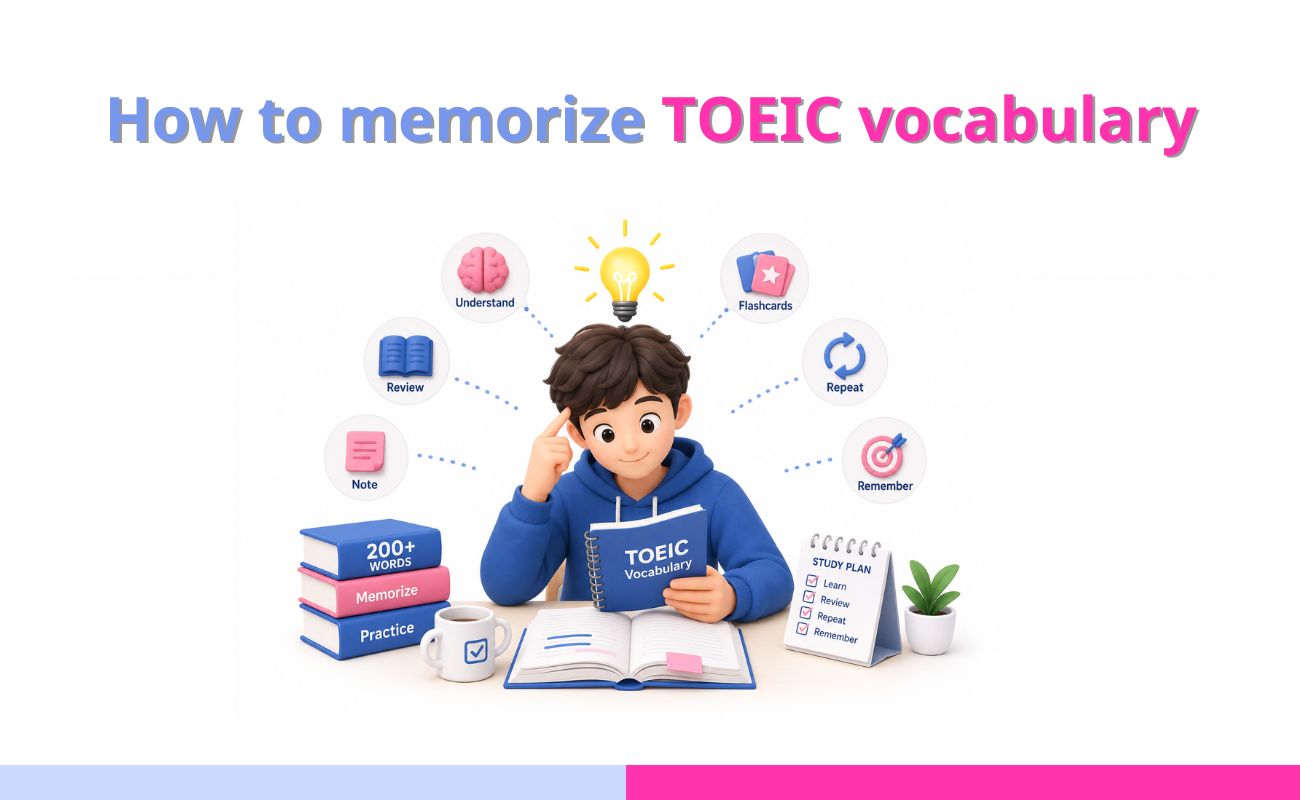
A long TOEIC word list becomes much easier to manage when you study TOEIC vocabulary by topic and review it through realistic test situations.How to memorize 200+ TOEIC vocabulary words effectively
Study one topic at a time: Learn around 15-20 words from one group instead of mixing unrelated vocabulary in the same session.
Learn each word in a common phrase: Do not memorize deadline alone; learn phrases such as meet a deadline or extend a deadline. This makes the word easier to recognize in TOEIC sentences.
Write one practical example: Create a short workplace sentence for each new word, such as “The shipment has been delayed due to bad weather.” Keep the context close to emails, notices, meetings, or customer conversations.
Review at fixed intervals: Revisit new words after one day, three days, and one week. Spend more time on words you still confuse rather than repeating the entire list.
Test active recall: Cover the meaning and try to explain the word, pronounce it, and use it in a sentence before checking the answer.
Mix vocabulary with TOEIC practice: After finishing a topic, complete a short listening or reading exercise related to it. Real test context helps turn recognition into long-term memory.
Practice one topic at a time, but make sure you use the words rather than simply rereading them.
Start with active recall: Hide the meaning, pronounce each word, and explain it in your own words before checking the answer.
Use the words in context: Complete short exercises related to the topic, then write down any phrases or word combinations you missed.
Review your weak words: Return to unfamiliar vocabulary the next day instead of repeating the entire list.
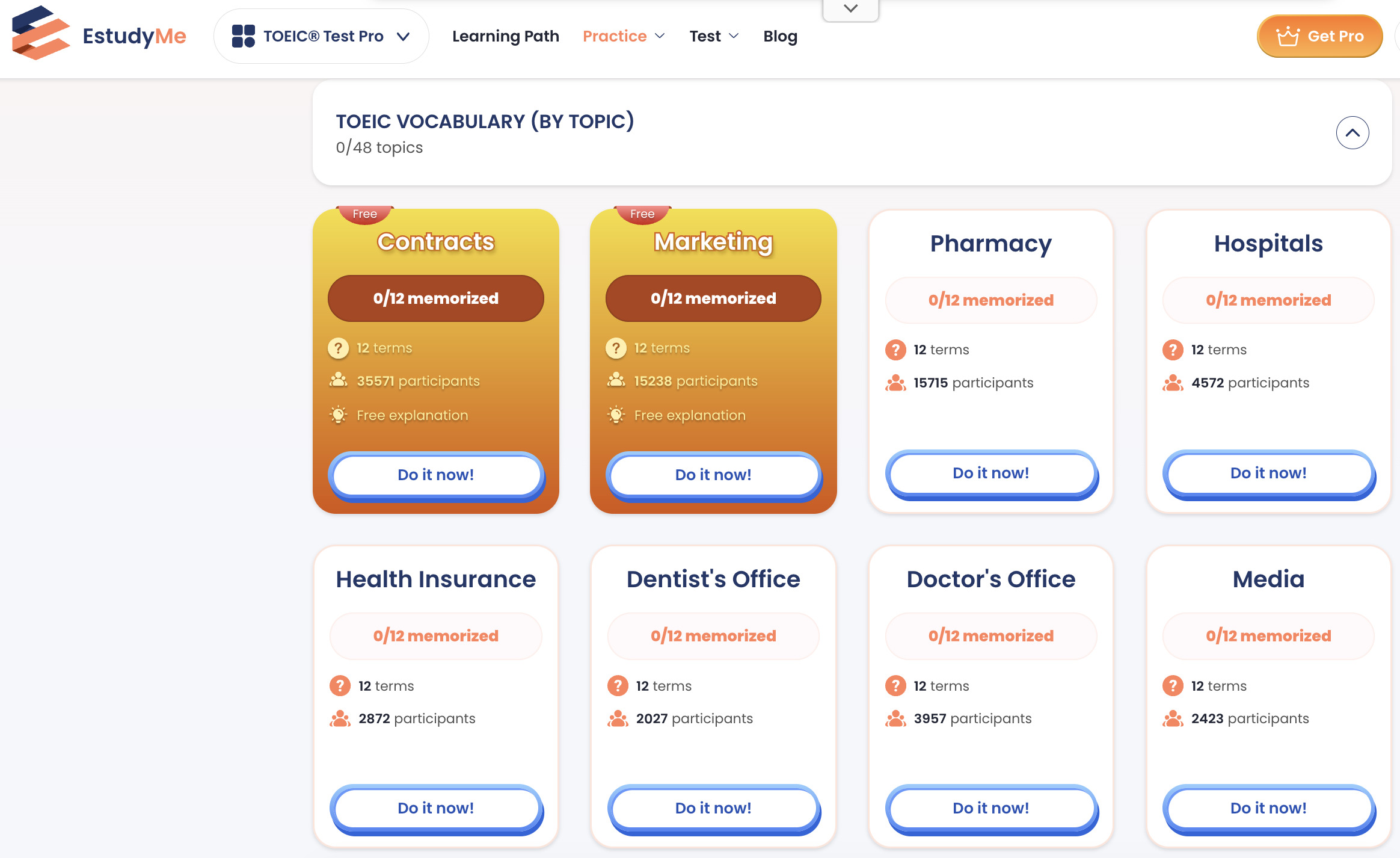
Practice TOEIC vocabulary by topic with TOEIC Test Pro
For a more structured routine, try the freeTOEIC practice vocabulary exercises on TOEIC® Test Pro. You can study by topic or test part, review detailed flashcards, mark words for further practice, and track your progress as you learn.
V. Conclusion
You do not need to memorize hundreds of unrelated words to build a strong TOEIC vocabulary. When you study TOEIC vocabulary by topic, each word becomes easier to understand, review, and recognize in real test situations. Keep your practice focused, return to difficult words regularly, and use TOEIC® Test Pro to turn steady review into measurable progress.


 Benefits of learning TOEIC vocabulary by topic
 200+ essential TOEIC vocabulary by topic
 How to memorize 200+ TOEIC vocabulary words effectively
 Practice TOEIC vocabulary by topic with TOEIC Test Pro